If you had to choose just one point to invest in your child’s education, Herne Hill School Headteacher Ngaire Telford argues that the very best return is in the early years

A report published by the Institute for Fiscal Studies in September 2021 found that the gap between private and state school spending per pupil had doubled over the previous decade, widening to about 90%. This gap will have undoubtedly increased over the past three inflationary years and is unlikely to reduce significantly near-term, even with the government’s promised additional funding for education. 

The flip side of an independent education having become so much better funded is that it is increasingly unaffordable for many parents – at least not for the entirety of a child’s school years, which can easily cost over £250,000 (and this is before the addition of any imposed VAT).

As a result, more parents with some (but limited) funds available for private education are likely to be considering dipping in and out of the independent sector. But into which educational cycle is it best to invest? Fortunately, the answer has become clearer than ever. Multiple research studies from around the world show that the Early Childhood Education (ECE) period, which runs through to the age of 7-8 and requires a special pedagogical approach, offers by far the greatest return on investment – not least because longitudinal studies have shown that advances achieved by that age tend to ‘stick’ and last a lifetime.

Once ahead, one stays ahead. This is not only beneficial in terms of subsequent educational stages, future health and earnings as an adult, but also for society at large. American research found that for every dollar spent on high-quality early childhood programmes, society gains up to $7 through increased productivity and reduced costs associated with remedial education, healthcare and criminal justice. 

Over the past three decades, advances in neurobiology, behavioural and social sciences have proven unequivocally what Aristotle predicated centuries ago: ‘Give me a child until he is 7, and I will show you the man‘. We now know with certainty that it is indeed by 7 that all foundational skills, values and personality are established. The fundamental reason underlying ECE’s importance is how our human brains develop. A newborn’s neural connections (synapses) form at a mind-boggling speed of up to a million per second, peaking at the age of 2-3, which coincides with the ideal time to start in a high-quality kindergarten, either part-time or full-time.

“The Early Childhood Education (ECE) period, which runs through to the age of 7-8 offers by far the greatest return on investment”

From then, a drastic ‘pruning’ of synapses sets in. Children discard the ones they do not need and strengthen those which help them thrive in their environment. Overall, we lose about half of our synapses by adulthood, with the curve being steepest in the months and years following the peak. It is the steepness of this curve, and its mirror image of steep learning trajectories, which explains why continuity through 7+ in a familiar high-quality setting offers optimal development.

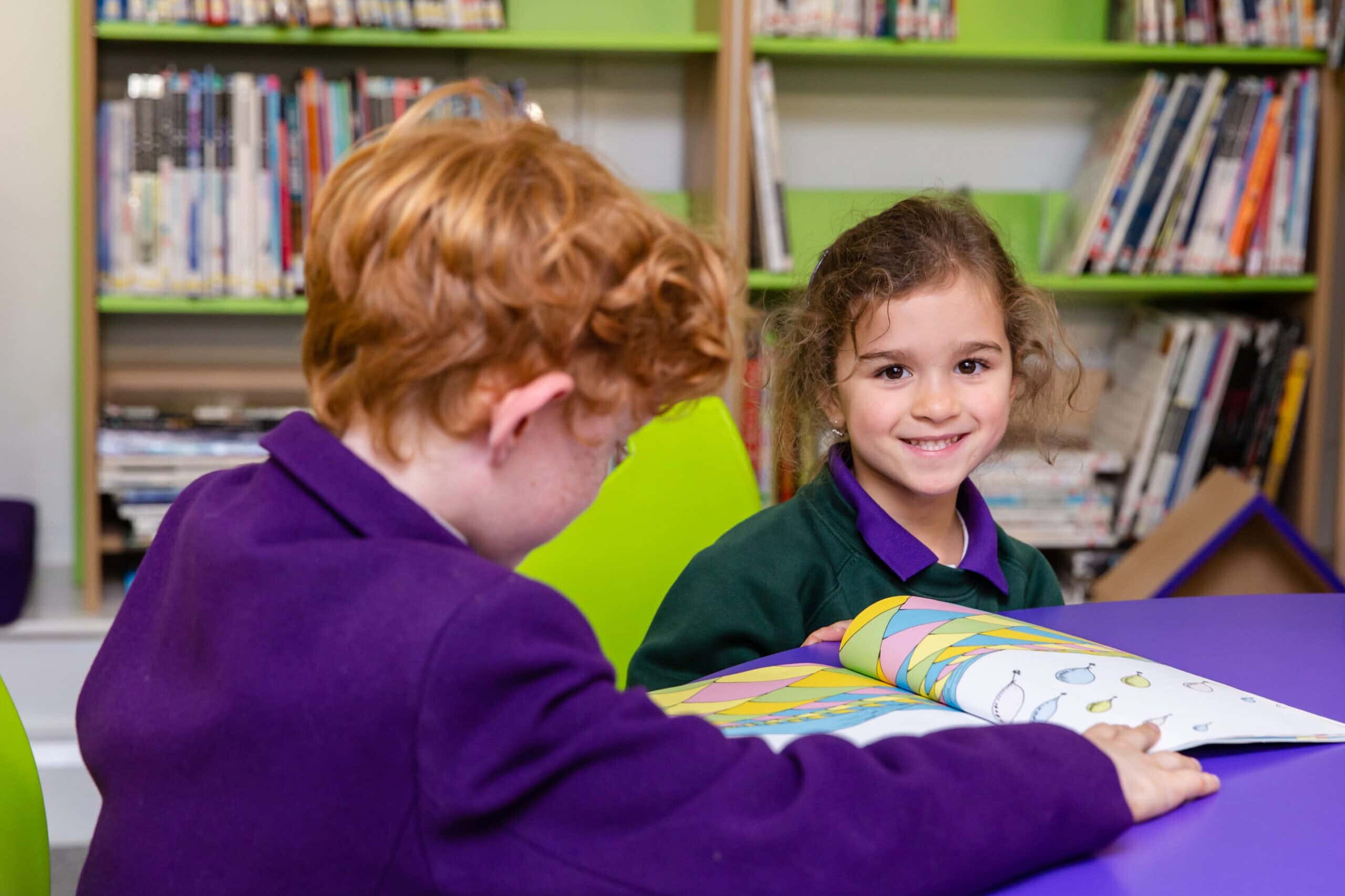
Our age range at Herne Hill School directly reflects the science and matches the worldwide accepted actual range of ECE, which carries on for two years after conclusion of the English EYFS. We are fortunate to be able to channel our parents’ hard-earned cash solely into this pivotal stage of development. It also enables the children to become the oldest at the school in a co-ed environment, thereby honing their leadership skills and sense of social responsibility. They move on from us equipped academically and emotionally to meet life’s next opportunities and challenges.

Herne Hill School hernehillschool.co.uk

Further reading: The power of giving back