Emma Watson, Head of St Catherine’s, Bramley, on why we must help children focus on the importance of not just doing well academically, but doing good through their choices
As teachers, parents, and school leaders, we often think about the importance of raising healthy, successful, independent young people who can reach their potential through determination and effort, and who are respectful, honest, and kind. These are essential traits and form the foundation of strong character. But perhaps we should go a step further, because in today’s world, it’s not enough to focus on doing well. To help our children live fulfilling lives, we must teach them how to do good.
Character education is not just about instilling values; it’s about empowering our students to act. This means helping students understand that their integrity, empathy, and courage must be lived out in the real world and online, where their choices can uplift others, challenge injustice, and create lasting change.
Take Sir Tim Berners-Lee as an example. He created the World Wide Web in 1989 and jumpstarted the revolution we now simply call ‘online’. But rather than monetising his creation, Berners-Lee made a different choice – he gave it away. No patents or royalties, just a gift to humankind. As a professor at Oxford and MIT, he was committed to openness and universal standards, ensuring the web served humanity by promoting digital rights and closing the connectivity gap. At the 2012 London Olympics opening ceremony, Berners-Lee typed a simple, powerful message: ‘This is for everyone‘. The lights across the stadium reflected the sentiment, acknowledging the millions of lives already changed by the web and the man who gave it freely.
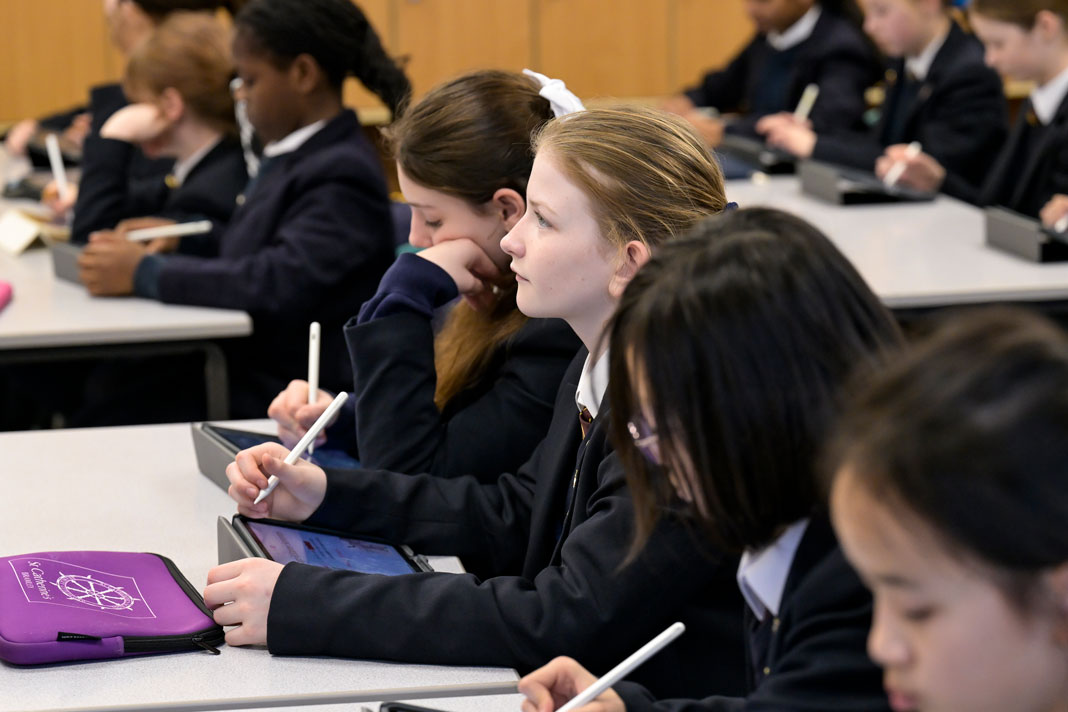
At St Catherine’s, character education is not a bolt-on – it’s at the core of everything. Whether it’s through community service, House events, student mentorship, or simply encouraging students to look after each other, we are committed to nurturing not just ‘good students’, but active citizens – students who do well and do good. We want our students to understand that kindness is more than politeness, it’s stepping in when someone is being hurt, bullied or insulted. That integrity is more than honesty, it’s speaking out when something is wrong or unjust. And that leadership is more than popularity, it’s using your influence to make positive change.
We need a generation that doesn’t just hope for a better future but builds it. And that starts here, in our classrooms, on our sports fields and in our homes. Our children watch how we adults treat others, respond to challenges, and use our voices. It’s vital we show them that doing well isn’t just about accomplishments and grand gestures, but daily choices.
We know that AI will only get more sophisticated, more able and more versatile. None of us know exactly what that will look like, only that it will bring with it both good and bad. Our students need to be able to participate ethically and make wise decisions. AI won’t replace schools, but as educators we need to embrace our role by prioritising human connection, character development, an ethical mindset and the courage to do good, alongside the capability to use an increasingly powerful technology.
St Catherine’s School, Bramley stcatherines.info
Further reading: St Clare’s, Oxford on developing leadership for life
You may also like...