With parents increasingly looking for something more than strong academic results, St Dunstan’s College Junior School Acting Head Alex Murphy discusses how its whole-child philosophy aligns with new measures of success in the critical prep years
What do you think parents are looking for in today’s independent prep education and how is the market evolving?
Parents today are looking for something fundamentally different from even a decade ago, when I first joined St Dunstan’s. Now, it’s not simply academic success – which is a given – but an education that develops the whole child. At St Dunstan’s, we see families prioritising individuality, breadth of opportunity and the development of character alongside those strong and rigorous academic foundations.
There has been a clear shift away from the idea of producing a particular ‘type’ of pupil. Instead, parents value schools where children are encouraged to explore widely and define themselves. Our school badge and motto, Albam Exorna (‘Adorn the white’) resonates strongly here. Families want their children to write their own story, not conform to a predetermined path.
How important are elements such as pastoral care and breadth of opportunity?
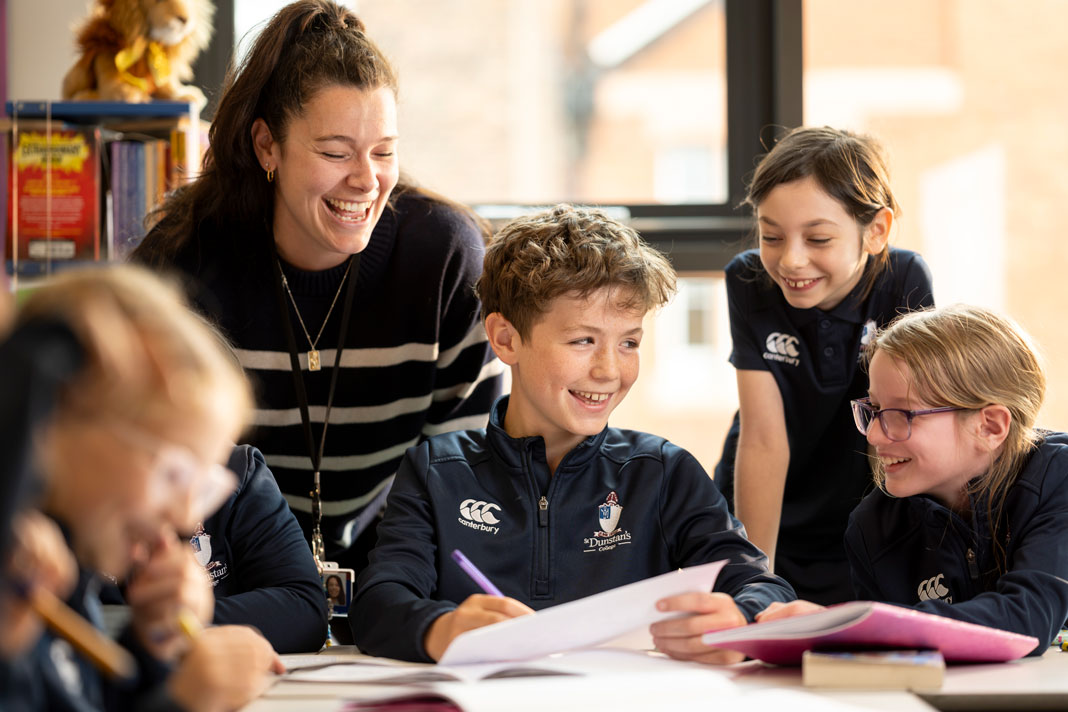
Wellbeing and pastoral care have moved decisively to the forefront. Parents are increasingly informed about the importance of emotional intelligence, resilience and confidence, and seek schools where these are explicitly taught and embedded. At the same time, they want reassurance that academic standards remain ambitious and outcomes strong.
Breadth is another defining feature. Families expect opportunities in sport, the arts, technology and leadership to sit alongside academic learning – not as extras but as integral to the curriculum and part of the fabric of the school. Finally, there is a growing emphasis on global awareness and inclusivity. Parents value diverse, outward-looking communities where children develop empathy and cultural understanding, preparing them for a rapidly changing world.
In essence, expectations have evolved from outcomes alone to experience, identity and future readiness. The most compelling schools are those that balance academic ambition with authenticity, ensuring pupils leave not only successful, but self-aware, confident and ready to contribute meaningfully beyond the classroom.

Do league table rankings still factor highly in parents’ decision-making process?
Yes, but their influence has become more measured and contextual. For some families, particularly those focused on selective senior school pathways, academic outcomes remain an important benchmark, offering reassurance about standards and progress.
However, parents now interpret league tables with far greater sophistication. There is a growing understanding that rankings present only a narrow snapshot – often focused on attainment rather than progress, wellbeing or the breadth of a child’s experience. As a result, while the league table is a significant contributing factor, it is rarely the deciding factor.
At St Dunstan’s, we see parents using data as a starting point, rather than an endpoint. Other evidence is now seen as more meaningful, as it reflects the journey each child makes. For example, our rising academic outcomes, strong value-added scores and high retention demonstrate both academic strength and pupil satisfaction.
“Our mission to offer ‘Excellence. Differently’ is applied to everything that we do, from academic progress and outcomes to co-curricular provision”
Increasingly, qualitative factors carry greater weight. Parents want to understand a school’s ethos, the quality of relationships, and how children feel day-to-day at school. They look for environments where pupils are engaged, confident and supported, not just performing well.
Word-of-mouth, school visits and pupil voice are often more influential than published rankings. Families want to see a thriving community – pupils who participate fully, embrace opportunity and develop beyond the classroom. Ultimately, strong academic outcomes are just one part of a broader picture. The strongest schools are those where success is defined not solely by results, but by the character, confidence and capability of the pupils themselves.

With high living costs and VAT on school fees, how important is ‘added value’ to parents as a factor in school selection?
In the current economic climate, ‘added value’ must be both tangible and clearly articulated. Our mission to offer ‘Excellence. Differently’ is applied to everything that we do, from academic progress and outcomes to co-curricular provision and opportunities.
Pupil wellbeing is the foundation for adding value, and we deliver that by ensuring strong relationships with teachers and a nurturing ethos. Through the Stuart Curriculum and our Wellness Centre, wellbeing is embedded, supporting resilience, emotional intelligence and children’s confidence.
While we’re proud of our academic outcomes, we consider each individual when discussing achievement and attainment. Our use of adaptive teaching ensures that every pupil is both supported and stretched, enabling strong value-added outcomes regardless of starting point. Our co-curricular programme of over 200 clubs annually ensures that every child can explore interests, develop talents and take risks in a supportive environment. This is complemented by the Albam Exorna Curriculum, which explicitly teaches life skills – from financial literacy to innovation and character education – ensuring pupils are equipped for the future, not just examinations.
“St Dunstan’s College Junior School pupils are intellectually challenged but also inspired to approach learning opportunities with curiosity and confidence”
We believe measuring added value requires a balanced approach. Quantitative indicators include attainment and progress data, scholarship outcomes (over half of our pupils receive scholarships) and strong retention rates. Qualitative measures, such as pupil voice, parent feedback and levels of engagement, are equally important as they provide insights into how each pupil experiences their education.
Ultimately, added value is best demonstrated through outcomes that are both measurable and visible – that means pupils who achieve highly and also show curiosity, independence and a strong sense of identity. It is this combination that defines true value in today’s prep school education.
How do you balance academic rigour and co-curricular opportunities?
We don’t see academic rigour and co-curricular breadth as competing priorities, but as mutually reinforcing elements of a single, integrated educational approach. Academic excellence is secured through a mastery-driven curriculum in English and mathematics, alongside the International Primary Curriculum, which promotes deep understanding and real-world application. Specialist and adaptive teaching approaches mean that each pupil is appropriately stretched, ensuring high standards and a rewarding learning experience for every individual.
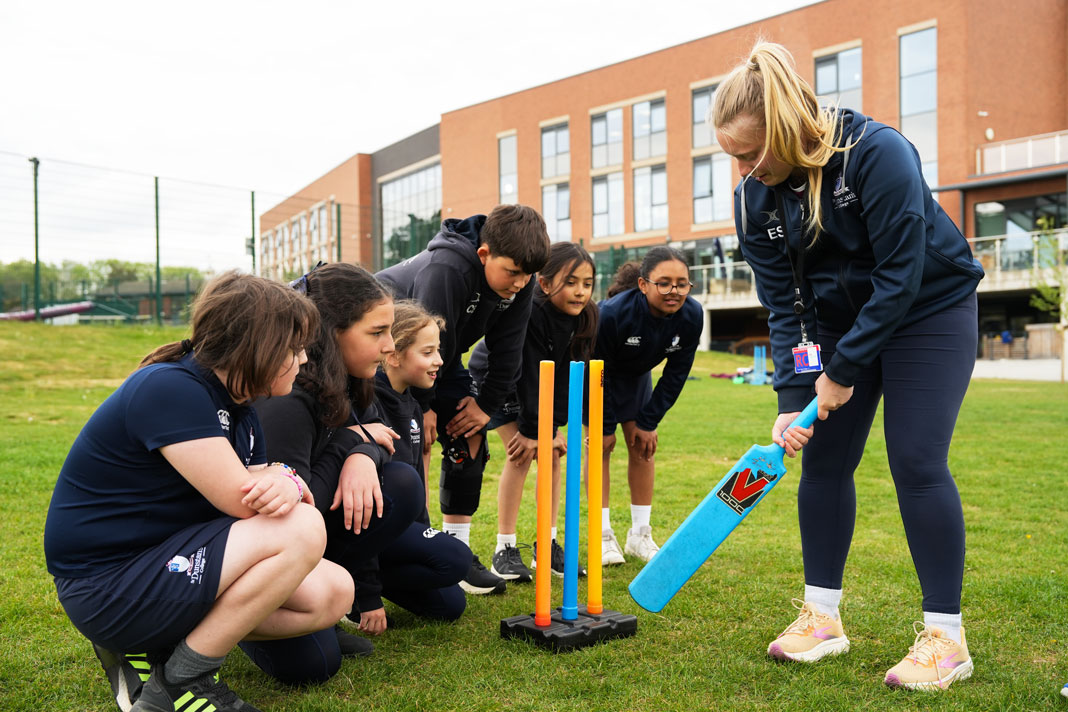
Breadth is built into the structure of the school day. Our co-curricular programme is a fundamental part of the pupil experience. Opportunities in sport, performing arts, technology and leadership develop skills such as resilience, collaboration and discipline – these skills are directly transferable to the classroom and support academic success. Our Albam Exorna Curriculum also connects academics with skills in real-world contexts.
Pupil progress is closely tracked, and academic outcomes remain consistently strong, while careful planning ensures that all pupils can participate meaningfully in wider opportunities. The result is a culture where St Dunstan’s College Junior School pupils thrive across multiple domains. They are intellectually challenged but also inspired to approach learning opportunities with curiosity and confidence.

St Dunstan’s Junior School has a long-held reputation for delivering well-rounded young people. How is this achieved?
The success of St Dunstan’s Junior School lies in an authentic philosophy where academic ambition and a well-rounded education are deliberately and strategically intertwined.
At the heart of this is exceptional pastoral care. Children thrive and take risks when they feel safe, happy and secure. This is only possible where each child feels heard, respected and valued. Supported by the Stuart Curriculum and dedicated facilities, our pupils feel secure, confident and ready to embrace challenge.
Our ‘Adorn the white’ badge and motto exemplifies our belief that every child should be encouraged to seek their own path, explore widely, take risks and discover their strengths. The Albam Exorna Curriculum encapsulates this philosophy through six strands – including Technology and Innovation and Community and Character Development. We have other targeted pathways, such as the More Able Pupil Programme, supporting the development of children who demonstrate particular passion or aptitude in specific subject areas.
Finally, success is down to the strength of our community. Our diverse, inclusive environment fosters empathy, global awareness and a genuine sense of belonging that enriches every aspect of school life. We’re proud that the result is a school where pupils achieve highly but, more importantly, grow as confident, curious and authentic individuals, fully prepared for the next stage of their education journey.
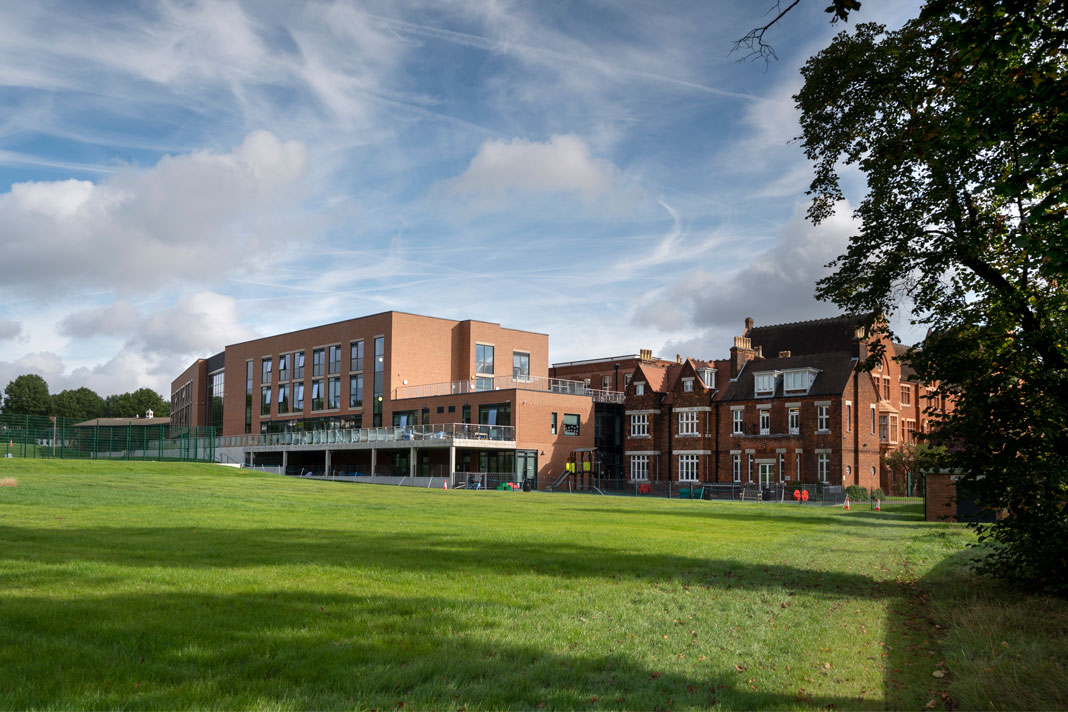
St Dunstan’s College
Junior School
Stanstead Rd
London SE6 4TY
NEXT OPEN DAY Saturday 19 September 2026
stdunstans.org.uk
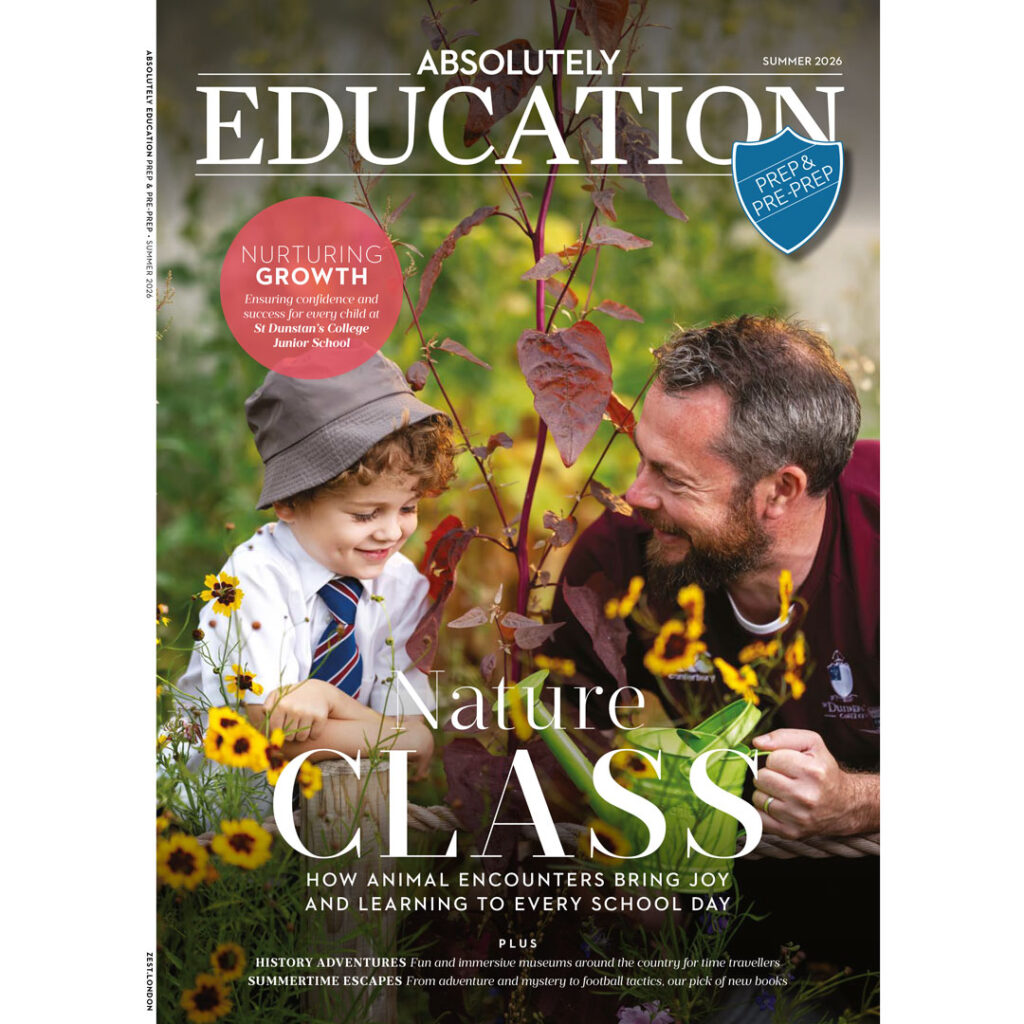
Further reading: Outdoor time – why school gardens are so important for pupil wellbeing
You may also like...