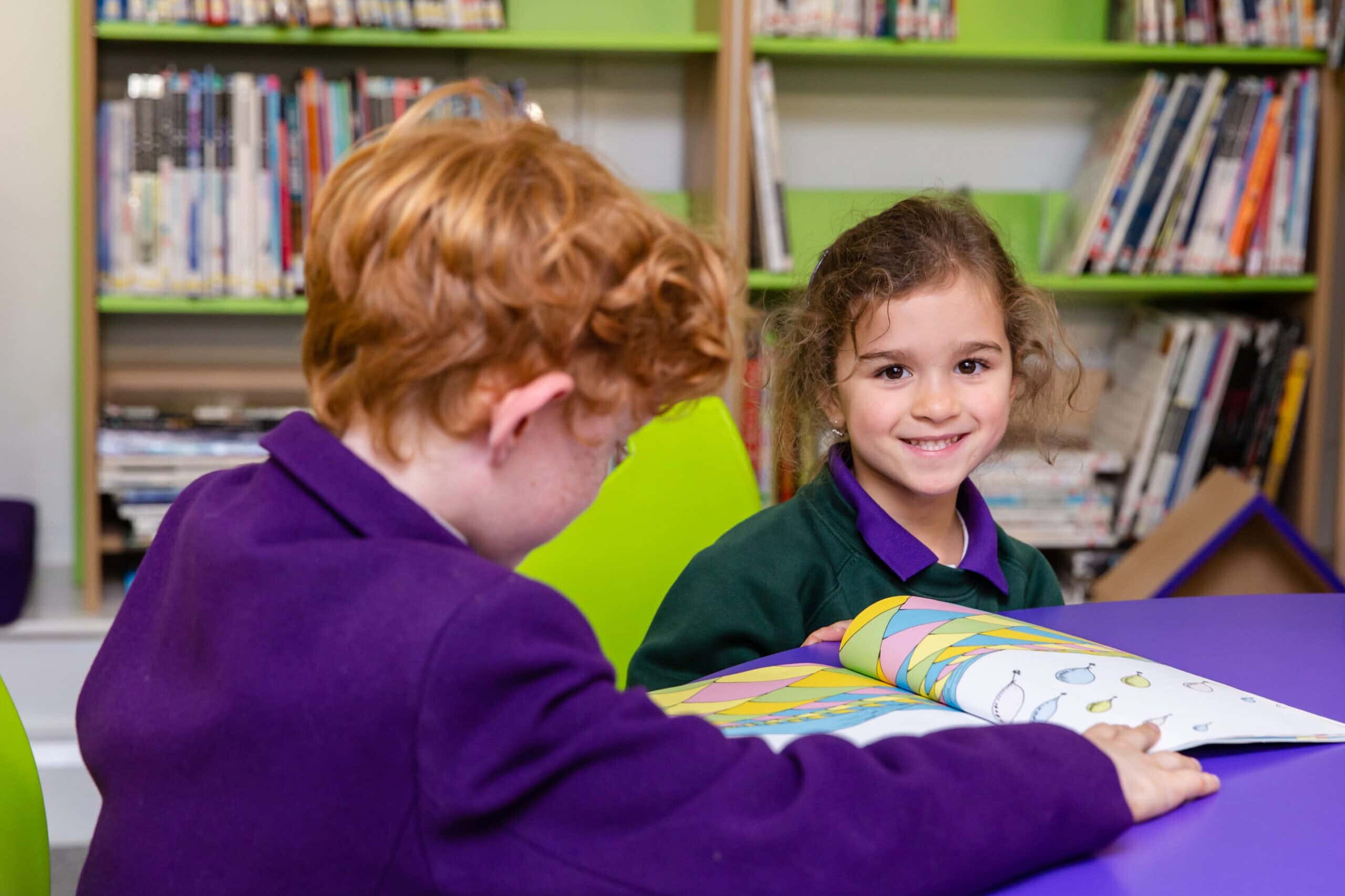
Early years specialist Sophie David is on a mission to demystify phonics with her latest book – and ensure children and parents have fun together
Mention phonics to many parents and their eyes glaze over. It’s something Sophie David saw as a teacher and specialist in early-years – the parent confused about what they actually were or worried about saying sounds wrong, even thinking they couldn’t help their child because of their own dyslexia. It’s one reason she’s on a mission. “We need to change the narrative with learning to read and write,” she says. “Let’s try and embed as much play into our learning as possible.”
This is the approach that underpins her new book, Read, Write, Play. It’s a comprehensive guide to phonics, but delivered in a way that’s accessible, practical and engaging for children and parents. It’s structured by age and phonics phase. The projects are simple, easy to organise and come with excellent visual and written instructions. A lot of thought has gone in to creating such clarity. Ask how long she took to devise the book and there are two answers. “The book has been in development for years, since I became a teacher! To write it has taken about a year.” It is a brilliant distillation of practitioner-tested approaches – ones she’s used in her work and in her own home. In fact, the children photographed doing the activities are her young sons and daughter.

Read, Write, Play may have been created by a teacher, but it offers ideas that feel nothing like a school day. Usefully, it starts at beginning with Phase 1 phonics (age 2) and goes all the way up to Phase 6 (age 7). Phase 1 is all about games to support listening – the foundation of understanding how letters sound and being able to replicate them. By Phase 6, there are play activities to help with reading practice, comprehension and spelling.
Originally Sophie David’s publishers suggested the book should leave out Phase 1, but she argued for its place in setting the foundations. “Phase 1 phonics encompasses everything. It encompasses speaking and listening. It encompasses opportunities for sharing, opportunities for really exploring sounds and really understanding their environment,” she says. “We need to start where that process begins for children.”
The other reason she wanted Phase 1 is because not every child develops at the same rate. This has always been the case, but right now it’s widely recognised that there’s an increased incidence of speech and language delay. The jury’s out on why that is – a Covid after-effect, the result of increased screen time or multiple factors – but what we do know is that more children need some extra support.
“I want every child to be able to access this, not just the neurotypical child,” she says. That’s also why there’s a set of images at the back of the book, beautifully modelled by her daughter and showing the way our mouth should look when we make different sounds – extra expertise was provided for this by a specialist speech and language therapist.
“If you’ve got a pack of plastic cups in your cupboard you can do at least 20 of the activities in the book”
While parents who would like extra guidance can dig deep into practitioner-created extras, the main body of the book delivers simple and fun ways to help make phonics stick. This makes it an ideal dip-in resource for those parents who just want some projects to pick up and try with their child. “One thing I wanted to get across is encompassing all parents, especially working parents. I just wanted to make the ideas accessible,” says Sophie David. “If you’ve got a pack of plastic cups in your cupboard you can do at least 20 of the activities in the book.”
The mix of ideas is diverse and varied to suit different timescales, ages and moods – and with lots of quick activities. Usefully many of them, such as a treasure hunt in search of objects around the house, also burn off energy. “Sitting at desks and writing in a book is not the best way to learn, so I wanted to incorporate as much movement as possible.”
And, for the many parents who worry that their child is incapable of sitting still at all, Sophie David has welcome reassurance. “Typically, a child’s attention span is two minutes for every year of their life. So, if they are four, on average they should be able to concentrate for, say, six to eight minutes.” She’s keen to stress that this really does vary from child to child and also, importantly, children don’t just magically transform into beings who sit down and focus when you ask them to.

“Parents need to know that this attention span and the time that they’re giving their children, it doesn’t just start,” she says. “What we have to start doing is building these little windows of fun and attention with games and listening activities so that it builds their attention span over time.”
Read, Write, Play is the perfect way to start building that attention span and, more importantly, try activities that children will enjoy. Best of all, they won’t think of the activities as learning because they are interacting and playing with you. Sophie David is a great fan of home-based play – she reckons it’s often more memorable for a child than an expensive day trip or planned activity. “One thing your child wants is your time. The entire premise of what I do is trying to build these moments of connection.”

* Read, Write, Play by Sophie David is out now (Robinson, £22). For more of her play-based learning ideas, visit littlehappylearners.co.uk
Further reading Growing movement- Hackney School of Food
You may also like...