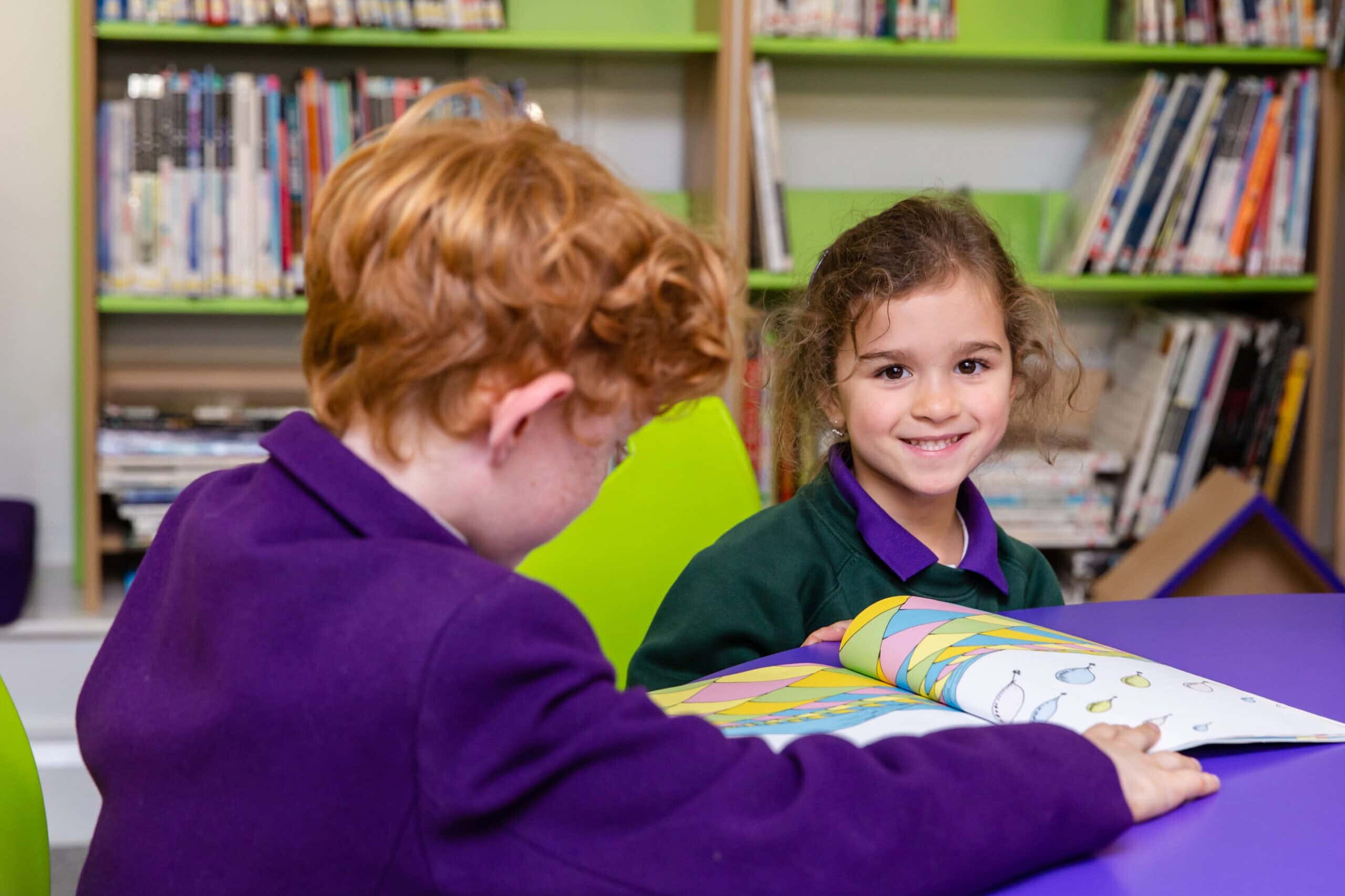
All children love stories, but not all are drawn to books. So how do we stimulate their interest, build reading skills and nurture a mindset in which turning the page to find out more is a pleasure not a chore? Two schools share how they champion reading
Dulwich College Junior School
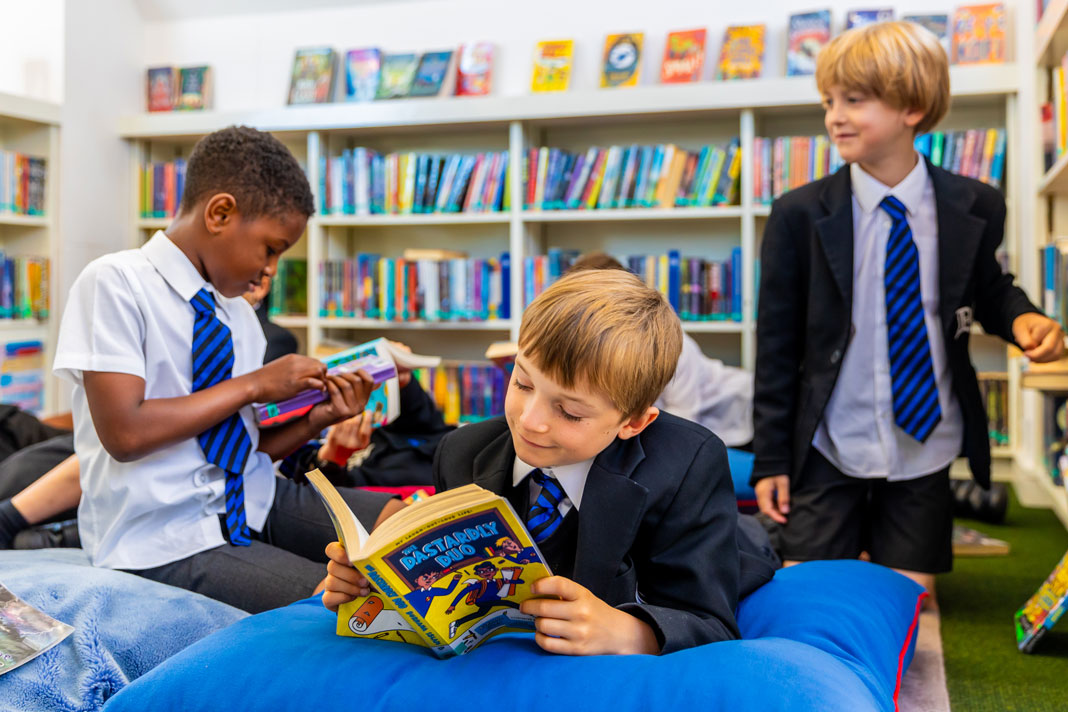
Boys are often seen as more reluctant readers than girls, but at Dulwich College Junior School, they overturn that assumption – and it all centres on the library. “Parents and pupils often tell us that there is a ‘magic’ in the Junior School library,” says Junior School Librarian Hazel Forbes. “There is most certainly a certain magic in books and reading,” she adds. But the team here don’t leave discovering the magic to chance and have clever strategies for embedding positive ideas around books and reading as early as possible.
Even before joining the College, children and their parents are invited along to the library for an introductory evening. Parents are also asked to send a photo of their child reading during the summer holidays. Photos are then displayed outside the library so that pupils feel welcome – this is their space.
There are practical ways in which this welcome is reinforced, with Library Induction Sessions and generous opening hours (8:30am-5pm every day). “It is a popular place for our pupils to come and sit, rest and relax – they have a variety of books and activities to choose from,” says Hazel Forbes. Forget the three Rs, at the Junior School Library they live by six of them – Read, Return, Renew, Reserve, Respect and Relax.
Once Dulwich College Junior School pupils get to Year 3, they are introduced to the ‘Rumbustious Reading Challenge’. For this, they are asked to read eight books and will get rewards for each milestone. Once four books are read, the children are presented with a certificate by the Head of the Junior School at a whole school Celebration Assembly. Around 70% of pupils complete this challenge, with many reading all eight books.
Children are given plenty of agency to inspire their skills as both readers and critics. At the start of every library lesson, there are Book Talks, in which children talk about what they are reading, if they are enjoying it and, if so, why. Peer-to-peer recommendations are welcomed, and Year 6 librarians take their role of helping younger children select books at lunchtimes and breaks extremely seriously.
“We also recommend different genres and new authors and encourage children to take a chance and read the first 30 pages,” adds Hazel Forbes. With stock updated constantly to ensure the latest and greatest is on the shelves, the team are firm believers in choice determining outcome. “We believe there is no such thing as a child who does not read. It is simply a question of finding the right book.” There is material to entice SEND readers and those who don’t gravitate towards the more typical fiction and chapter book formats.
“We believe there is no such thing as a child who does not read. It is simply a question of finding the right book”
Book Week is a big deal at Dulwich College Junior School, with a whole host of activities. The school welcomes authors to speak to different age groups, plans workshops and has a dress up day, where children come as a favourite fictional character. There is also ‘Drop Everything and Read’ day, where the whole school pauses to sit and read for a few minutes. And the annual short story House competitions is designed to inspire readers to put pen to paper and become writers.
While marking that annual celebration is important, author visits take place throughout the year. The school works closely with its local independent bookshops to set these up and other nearby schools are often invited to these events. “The children love meeting real authors,” says Hazel Forbes. “In the past year we have welcomed Alexander Armstrong, Hamza Yassim, David Baddiel, A F Steadman, MacKenzie, Serena Patel and Greg James.”
The weekly school newsletter includes children’s own book reviews, as well as forthcoming events and news on all things bookish. Dulwich Junior School also gives parents bespoke book recommendations, drawing on what their children have previously enjoyed. This is especially useful to keep the reading going during school holidays. As are holiday Reading Challenges, with pupils asked to read for ten minutes a day. There are prizes in the mix and parents often report that children read for much longer – sometimes it turns into a whole family reading session.
The importance of the library can’t be underplayed here, helping children to catch and keep the reading bug. “As librarians, we are constantly reading, recommending, listening, and personalising suggestions while being aware of new books, following trends and authors on social media and in the news,” says Hazel Forbes. “This is a vital part of keeping the library buzzing and up to date.”
Dulwich College Junior School dulwich.org.uk/junior-school
Moor Park
At Moor Park in Ludlow, Shropshire, they believe that reading starts long before children even decode their first word. “For our very youngest learners, books are not simply tools for learning, they are gateways to imagination, language, confidence and connection,” says Headmaster James Duffield.
“Literacy is not a single skill or a standalone lesson. It is the foundation upon which all learning is built,” he adds. “In an increasingly digital world, the ability to read deeply, write clearly and think critically has never been more important.”
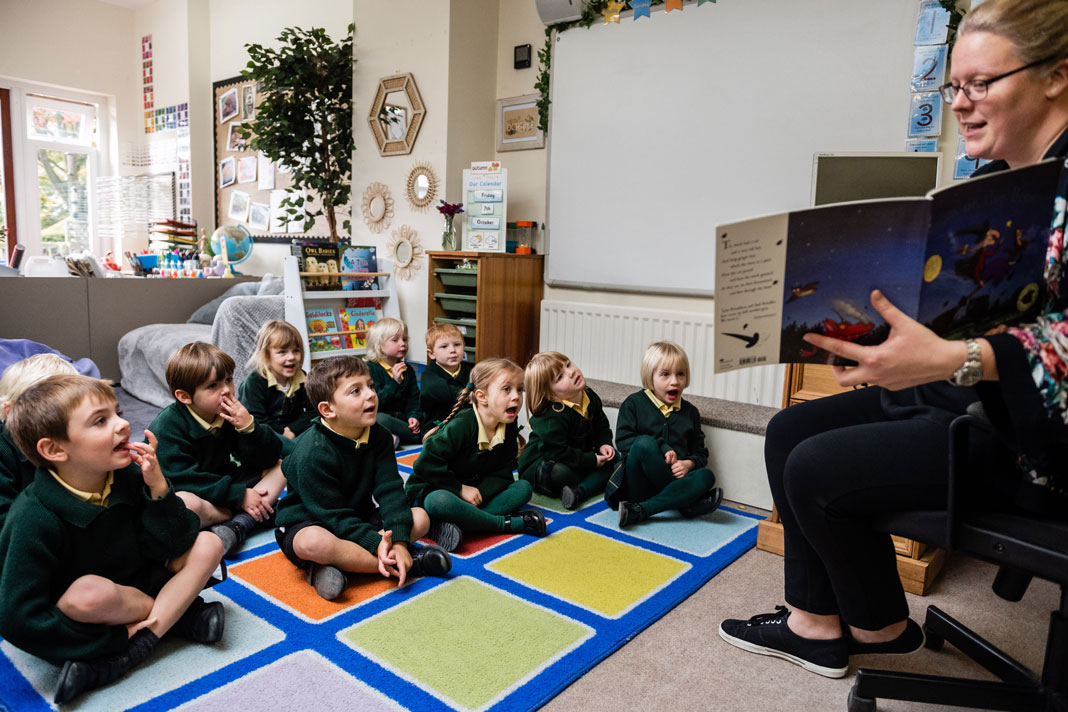
In Early Years, children are immersed in stories from the outset. Classrooms are full of picture books – from traditional tales to modern favourites – and story time is a hugely popular daily ritual. There is plenty of storytelling within and beyond books to support early phonics and help children on the journey to reading for themselves.
Visits to the school library – a well-stocked standalone space – are seen as vital for inspiring future readers. Pupils can visit during break times and there are comfortable spaces to sit and browse the options. This is in addition to libraries in each class stocked with age-appropriate books covering different areas of interest. “Giving children the freedom to choose their own books helps them feel ownership over their reading and turns it into something personal and enjoyable rather than simply a classroom task,” says James Duffield.
There is a firm belief at Moor Park that every child can become a confident reader, even if the journey looks different for each individual. Simple approaches, like encouraging children to carry a book with them at all times and handing out bookmarks, help support that connection with books. Early identification of barriers to reading and SEND support are seen as critical. There are targeted interventions – including multi-sensory phonics, one-to-one reading time and adapted texts – led by the Head of Learning Support in close liaison with families and teachers.
“Giving children the freedom to choose their own books helps them feel ownership over their reading and turns it into something personal and enjoyable”
“The aim is always to develop independence and a sense of achievement,” says James Duffield. “Success is scaffolded carefully so pupils experience progress without feeling overwhelmed. Above all, our inclusive ethos ensures that children feel safe, understood and valued. By combining high expectations with personalised support, we help every child at Moor Park see themselves as a reader.”
Special events such as author visits, World Book Day, National Poetry Day and National Storytelling Week are celebrated, transforming reading from something private into a shared and celebratory activity. Author visits make the creative process tangible, and this, says the school, naturally encourages children’s deeper questioning about character choices, plots and endings.
Parents are encouraged to become part of the reading journey, so that it is viewed as a pleasure out of school, not a chore. There is plenty of guidance on shared reading, plus book recommendations. “We also celebrate reading at school through events, book fairs, and family reading challenges, creating a strong home-school connection,” adds James Duffield.
Pupils, of course, play a vital role in helping reading to stick, with mentoring and peer-group behaviour influencing how books are views. Children from every year group read together regularly, with older pupils modelling positive reading habits and enthusiasm to inspire younger ones. This cross-age approach at Moor Park helps to build a genuine sense of shared enjoyment and community that champions the value of books and reading, for life and not just for school.
Moor Park School moorpark.org.uk
Further reading: Cressida Cowell on the magical powers of reading for pleasure
You may also like...