
UKSA Industry and Careers Coordinator Lauren Saltonstall on how its lifetime careers support is building resilient leaders for the yachting industry
Starting a career at sea is an exciting prospect, but it this also one of the most demanding environments a young person can step into. The maritime industry requires technical competence, resilience, and adaptability. Yet too often, the focus is on qualifications alone. In my experience working with students and graduates across our courses, success at sea relies just as much on welfare support and guidance as it does on classroom learning. Education does not stop when a certificate is issued – it evolves across an entire career.
Our training programmes, from the flagship Superyacht Cadetship to our Yachtmaster and Superyacht Hospitality courses, provide essential technical foundations. Navigation, engineering, seamanship, and safety skills are non-negotiable. But what prepares a young person for a long and fulfilling career in the industry is the ability to manage pressures, transitions, and the unique lifestyle of working at sea.
Life on board can be hugely rewarding, but it also brings isolation, long hours and extended periods away from family and friends. Without the support and preparation, these factors can knock confidence and lead to talented seafarers leaving the industry early. That is why a holistic approach, which places welfare alongside education and careers advice, is vital for progression and retention.
Welfare in practice
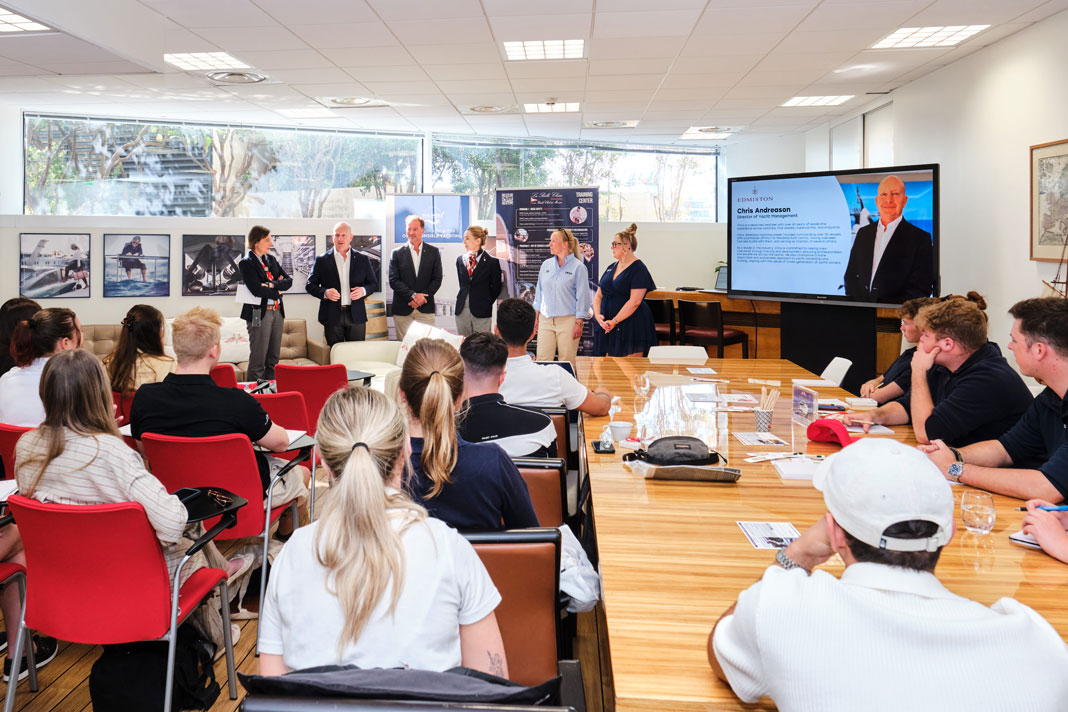
At UKSA, we know that support needs to follow our students. Thanks to the support of The Seafarers’ Charity, we are now able to provide on-location guidance in key yachting hubs such as Monaco, Antibes, and Palma. This includes one-to-one careers advice, welfare support, onboard mental health training, and wellbeing events designed specifically for crew.
These touchpoints make a tangible difference. A young graduate who feels isolated during their first season can have a familiar face to speak to for one-to-one guidance. A crew under pressure can take part in mental health training that gives them strategies to cope and to support their peers onboard. Regular wellbeing events create safe spaces for crew to connect, share experiences, and feel part of a wider community.
This not only helps individuals manage the realities of life at sea but also strengthens the industry by encouraging talent to stay and progress. The results speak for themselves. Recently, graduates from our Cadetship, Yachtmaster, and Crew Training courses worked for industry leaders Edmiston and Burgess at the Monaco Yacht Show – testament to the impact of combining training with long-term, holistic support.
What makes the difference is a joined-up approach. Training, careers guidance, and welfare are part of a continuous journey. At UKSA, we call this ‘lifetime careers support’. It means continuing to mentor, advise, and equip graduates as they progress from first placement into senior roles.
This benefits the wider industry. By prioritising welfare and professional development, we are helping to build a workforce that is resilient, committed, and ready to grow into leadership. Industry partnerships provide the opportunities, but it is careers and welfare support that ensures graduates are ready to seize them. Training is the beginning and the real education at sea is ongoing. And when we view careers through the lens of long-term support, we empower young people not only to succeed in their first role, but to thrive throughout their entire maritime journey.
UKSA uksa.org
Further reading: Careers and Higher Education advice for changing times
You may also like...