Diane van Dongen, Assistant Principal for Student Futures at Concord College, on the rising popularity of international university destinations, and how it helps students narrow down choices
At Concord, a large proportion (85%) of our students are international, and so we are accustomed to supporting their applications to university outside of their home country. Many of the things to consider are the same, whether you are a student applying to a UK university as an overseas student or a British sixth former considering a course abroad.
Fees, visa requirements, and often for international students in the UK, the need for formal proof of language skills are among the first issues that need consideration. University fees, even in the UK, vary between universities and courses for international students. Around the world, costs and the availability of support such as scholarships differ widely. A student’s ideal match in academic terms might be less attainable financially.
Particularly for professional courses, we also need to check that qualifications are transferable and would allow the student to work in their home country after they graduate. We also help young people who are required to complete national service, which might require a deferred entry or having support in place to prepare for application a year or two into the future.
“Our Futures programme brings together modern careers questionnaires and software, in-person careers advice and meetings with our alumni”
Some universities base entry overwhelmingly on exam grades, while for others – including many in the USA – extracurricular interests and ‘fit’ might be much more important. Appropriate advice can help students with a global outlook to play to their strengths. At Concord we begin exploring career and degree possibilities with our youngest pupils (13+) and from that point on help them to build a portfolio of knowledge about their options, and indeed themselves, ready for the moment they decide where to apply.
Our Futures programme brings together modern careers questionnaires and software, in-person highly qualified careers advice and meetings with our alumni – from very recent leavers still at university through to senior working professionals. This ensures students have a very clear idea of what their future path might entail. Such discussions may also lead us to link up students with alumni currently at their target university.
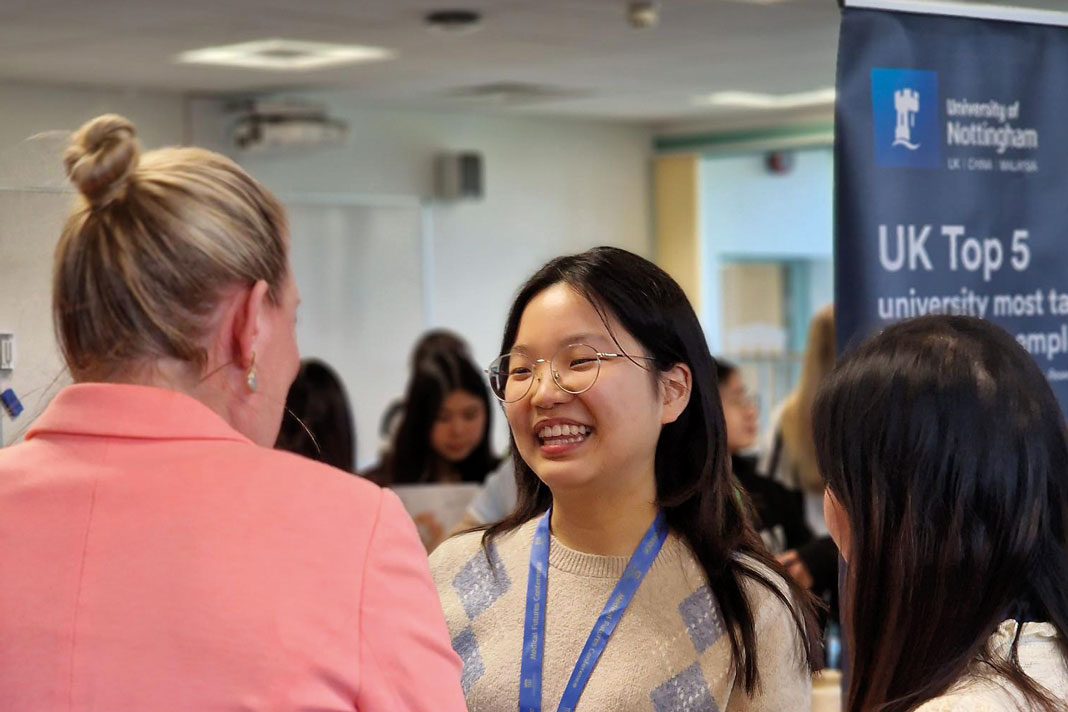
We use a system of university coordinators – staff who have specialist knowledge of university options in a particular field of study (for instance, engineering, medicine or history). Alongside these are coordinators whose specialist knowledge centres around different countries such as the USA, Canada, Hong Kong or Australia. Depending on their ambitions, students will have advice on both their field of interest and destination.
Many of our students apply to more than one country, using UCAS to make some UK applications alongside perhaps two or three somewhere else. Exciting though choosing might be, too many applications can be overwhelming, so it is important to help students narrow their shortlist of courses to a manageable and realistic applications list. US universities, in particular, need tailored applications for each – and that all-round ‘fit’ between student and university can be as important as grades.
Many of those who succeed in pursuing professional and business careers to the highest level now find themselves alongside colleagues from around the globe, and so studying abroad or in a very international setting can confer distinct advantages. At schools such as Concord, membership of an international community begins young and becomes part of our students’ daily life, but whenever and wherever young people have the chance to be part of such international teams, it is a distinct advantage.
Concord College concordcollegeuk.com
Further reading: International university choices – beyond the ‘Big Four’
You may also like...