
With more than 20 home languages among students, International School of London (ISL) is a model of a modern, multilingual education
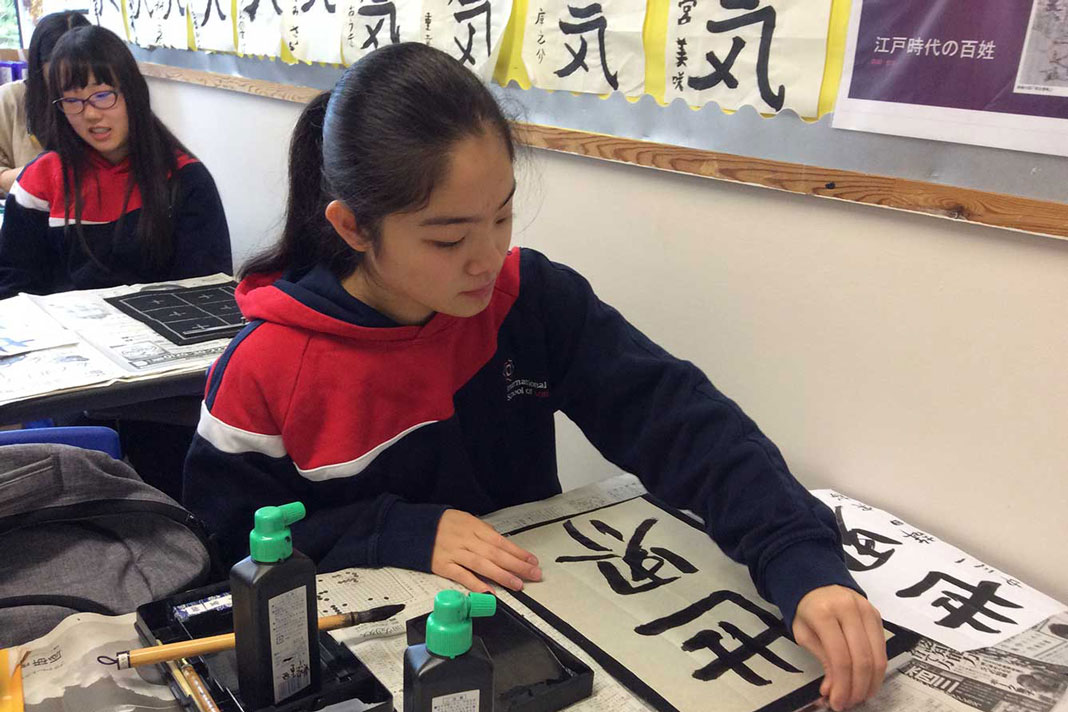
From the start of the 2025-6 academic year, Japanese joined English, French, Spanish and Mandarin as an International School of London (ISL) acquisition language – in other words, one of the languages children can learn alongside their home language when they join the school. The reasoning was simple, says the school’s Head of Multilingualism Zack Ekert. “We have a huge Japanese native community, whose language and culture already enriches the entire school.”
The school’s Japanese families have been right behind this addition. “We have this amazing community of parents, students and teachers,” adds Zak Ekert. “The Japanese natives – both parents and students – will be involved in the learning journey of those Japanese learners.”
Here, in a nutshell, is what sets ISL apart in its method of language teaching. It was founded in 1972 with a mission to enable children to retain and develop fluency in their home language within a strong academic framework. As an IB school, languages are always going to be an important element of the curriculum, but here the approach has gone above and beyond the already rigorous IB framework.
Home languages spoken across the school – currently 24 – range from Arabic and Danish to Hebrew, Hungarian, Russian and Turkish. Of course, deciding on a child’s home language is not always straightforward. “You might have five languages spoken within a family but not all of them fluently, so we need to find out these language stories,” says Zack Ekert. “The first thing I do with every family is interview them. There we pull out all the information to see where they’ve lived, their future plans, aspirations and language background.
“Sometimes, especially in families that speak four or more languages, parents have to think about what language should have priority at school, but the emphasis is always on encouraging them to provide children with as much exposure as possible to the family’s languages at home to supplement our curriculum.”
Many children who arrive at the school do not speak English with the fluency of natives, so their acquisition of English alongside their home language is carefully planned. “Standardised English language phonics doesn’t work when you have a child who is still developing their own Arabic or Japanese,” says Zack Ekert. “It assumes a fluency in the language. So, we’ve created our own customised phonics, which is really exciting.”
Alongside this, children build reading and writing skills in very small groups – sometimes one to one, and typically up to six. It’s all based on individual needs and learning profile. And, as a young child acquires English, they are also building on their home language. This means close liaison between the teacher of English and teacher of the home language so that content is complementary.
“What’s fun is when you have kids coming to you in the corridor and speaking to you in the language you’ve been teaching them”
“Consequently, we do focus on the nitty-gritty in the home language because it is an academic course, not a cultural course. We need students to have a confident understanding of their own grammar in language one, language two and so on.” The school refers to these as language A and B. Indeed, the school has very specific terminology – it doesn’t like MFL, considering the term ‘foreign’ to be unhelpful. And the acronym EAL (‘English as an Additional Language’) is replaced with English Language Learning (ELL). “It’s all about inclusion,” says Zack Ekert.
It’s a bespoke approach with a passionate commitment to ensuring the highest level of teaching. It took Zak Ekert two years to find the right Dutch teacher to join the team, and ISL will always try to source specialist provision for home languages not currently supported. The goal is to ensure that children retain their home language, and all the cultural ties, as well as building fluency and ease with English. And students can take up additional languages as they grow through the school.
This multilingual approach is not easy – learning languages can be hard – and Zack Ekert says they never minimise the challenge, but it’s amazing is just how well students respond. Parents have an important role to play. The school understands the natural pull of English, and also parents’ natural desire to ensure fluency so that children settle and thrive.
“There’s nothing wrong with the child speaking whatever language they want to speak, but we don’t want to encourage a superiority of English. The more you speak of one language the more priority you give it,” he says. “So it’s about making home and school safe spaces where children are encouraged to speak or discover things in all their languages. It’s also about having a constant respect for one’s home language.”
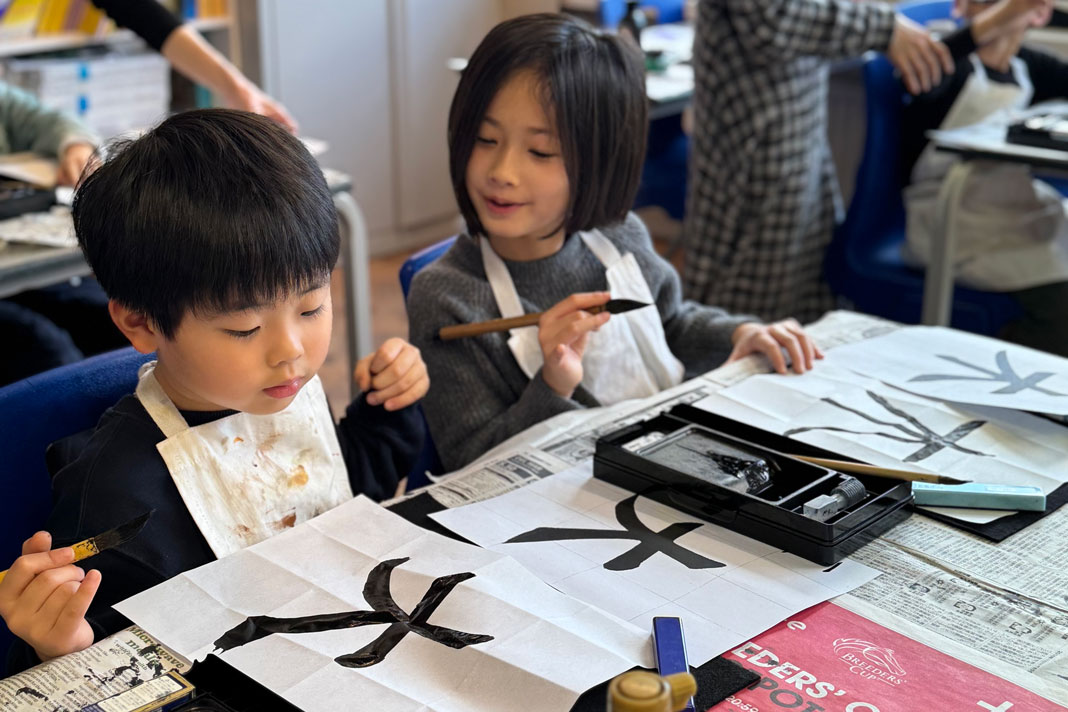
Once children join the Middle Years Programme, they may be learning up to three languages. Zack Ekert believes this exposure leads to greater maturity, and children really value the communication skills they acquire. That traditional teacher-student back and forth and the dry textbook describing an imaginary family on a picnic don’t happen here. Immediacy, conversation and real-world relevance are prioritised, particularly with language B.
“We’ve been collaborating with Goldsmiths and the head of teacher training there showed us this new approach. It’s all about delivering a genuine need to communicate,” says Zack Ekert. “We’ve already seen a real change in how students come to the lessons – they will ask for the actual language that they need there and then. It’s so powerful and it sticks in the memory.”
He sees this translate into fluent, easy communication. “One of the most rewarding moments is when students stop me in the corridor and start speaking in the language I’ve been teaching them. I teach French here, and it’s not just a quick ‘Bonjour’ – it often turns into a real conversation about their day.
“That’s what multilingualism is for me. It’s not about speaking lots of languages or teaching lots of languages, it’s about this constant exchange between cultures.”
International School of London isllondon.org
Further reading: Teaching languages – the state of play
You may also like...