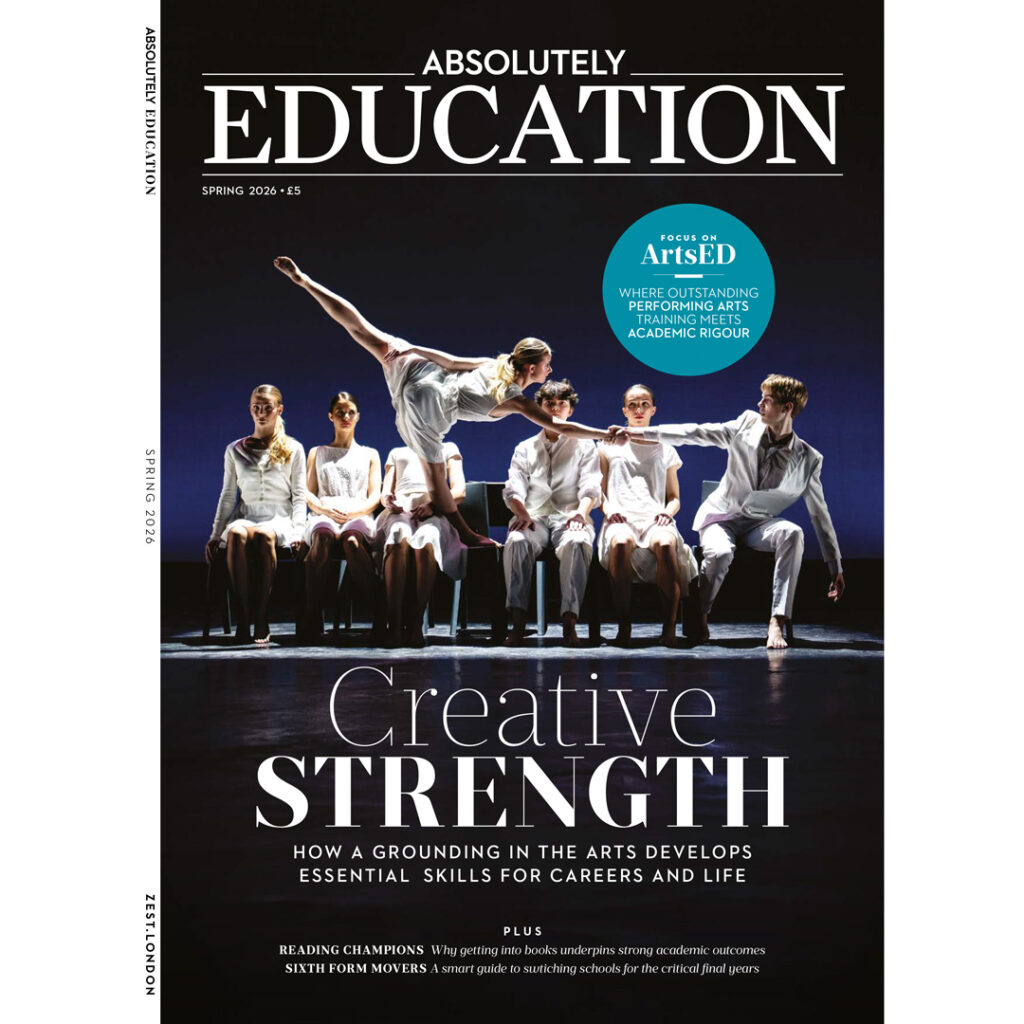
Combining academic rigour with exceptional vocational training in the performing arts, ArtsEd is a unique education proposition – proof positive that creative education builds confidence and achievement. Absolutely Education finds out more
Walk into ArtsEd Day School & Sixth Form and you can’t help but feel energised. Young people moving confidently and with a sense of purpose, the distant sound of dance rehearsals, someone executing a perfect-pitch high note on their way to an academic class. There’s a buzz. Students are all dressed in smart black tracksuits bearing school logo – comfortable and ready for an active and academically stretching school day.
The school inhabits a decidedly cool 20th-century building in Chiswick, a short walk from Turnham Green Tube. There are smart 21st-century additions, including a purpose-built theatre, extra performance and rehearsal spaces and a lovely rooftop terrace. The vibe is thoroughly modern but the roots run deeper. The school is over 100 years old, growing out of two institutions established by education pioneers Grace Cone and Olive Ripman. Their approach was to blend academic rigour and vocational arts training to prepare young people for bright futures.
That founding spirit lives on, palpably reenergised under the leadership of Headteacher Peter Middleton, who joined in 2023. He read Chemistry at Oxford and has worked in leadership roles across stellar independents, including Cheltenham Collenge and St Edwards Oxford. Prior to taking on the Head role at ArtsEd, he led Welbeck College and Kensington Park School.
The school’s latest ISI report in 2024 resulted in a coveted ‘Significant Strength’ for performing arts. Other areas were singled out for high praise, including curriculum and strategic planning, motivation of students, the school ethos and pastoral care. It is a glowing school report. Further confirmation came from an Independent Schools’ Association (ISA) award for Excellence in Performing Arts in 2024.
While the arts strength is evident, this is most definitely not a stage school. Far from it. Vocational training takes up about 30% of student time – Peter Middleton points out that this equates roughly to the time mainstream independent school pupils spend on sport and other active learning. The other 70% is academic. “We don’t fill all the spaces that we have because we do not take every child to fill up a quota.”
Admission is a three-part process, with pupils accepted in Years 7, 8 and 9. The vocational aspect is one part, with Years 7 and 8 auditioning in either Dance or Drama stream. At Year 9, they can pick either of these streams or opt for the Musical Theatre stream. There are group auditions twice a year, as well as individual taster days where a potential incomer spends a day with their year group.
The purpose of auditions is to look for what students can become. “These are designed not to see how good they are – whether they are a polished diamond or rough diamond – it’s actually about looking for potential,” says Peter Middleton. While some of the ArtsEd cohort already have an agent and tread the West End boards, many more do not.
Potential talent in the performing arts is the first test, but it’s equally important to ensure young people will be able to thrive in class. Maths and English tests students take at admissions are designed by ArtsEd – so nothing like 11+ or ISEB – and ascertain potential academically. “They will all be doing a minimum nine GCSEs, and the maths and English tests we set are designed to see if they will access the breadth of the curriculum,” adds Peter Middleton.

The final part of admissions is the interview, which parents also attend. “We want the parents to be able to ask questions but also understand what we are all about.” It’s critical that parents are committed, but this won’t be a sustainable school journey if they turn out to be more committed than their child. The three-part process is rigorous, certainly, but has the very simple purpose of ensuring every student really wants to be here and is able to manage the pace, the excitement.
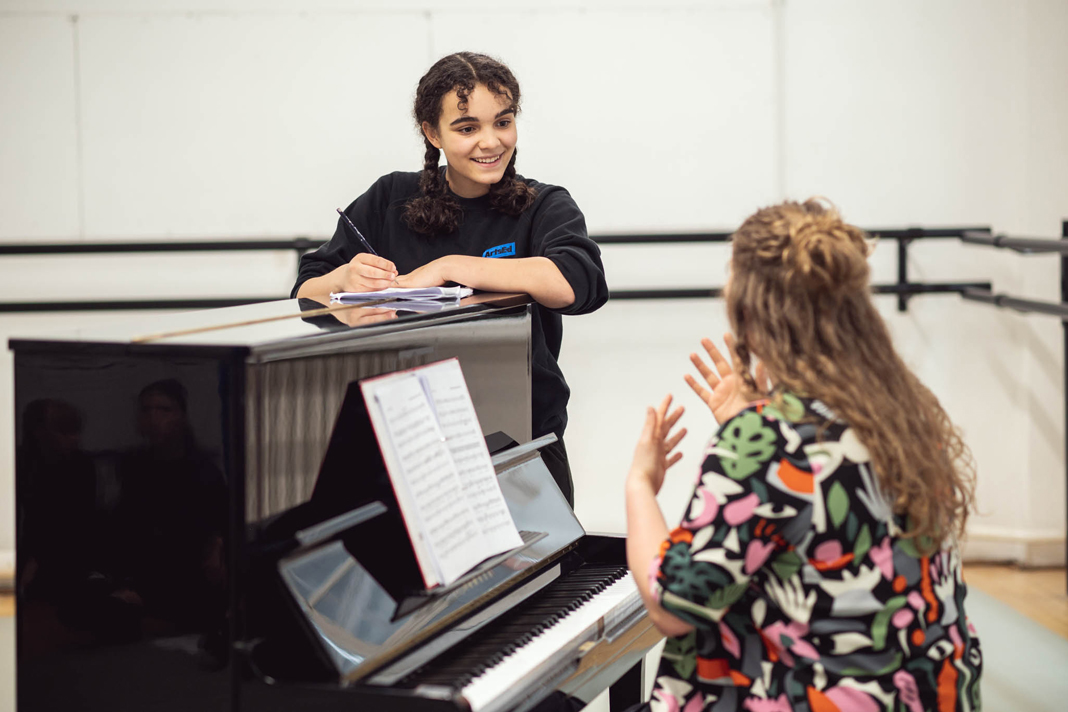
And excitement there certainly is. A high-energy tap dance rehearsal in one room, a drama run-through next door. But enter another room and you’ll find a maths, science or French class or a small group refining scriptwriting skills. Students power through busy days balancing highly active lessons and rehearsals with focused classes to give them a thorough academic grounding. You soon understand why the tracksuit is a good idea – ArtsEd staff discussed changing it a while back but the ‘keep’ vote from students was overwhelming.
Central to the whole ArtsEd vision is that children are presented with many opportunities, but no pathways are closed off. “What this is about is opening doors – it’s not about closing doors,” says Peter Middleton. At 16, with GCSEs under their belt, students move on to ArtsEd Sixth Form (after taking a further audition – no special pass for them) or head off to either a mainstream sixth form or specialist Year 12 institution such as Rambert.
Director of Performing Arts Natalie Bareham is clear about the added value of the ArtsEd pedagogical approach for young people who are talented but – by the very nature of age and stage – still exploring their options. “In this environment they see quite quickly how they are in relation to others, the range of work that’s out there. They get a much faster, more realistic sense of what the industry is and what working within it is.”
“The purpose of auditions is to look for what students can become – it’s actually about looking for potential”
This means, of course, that some children who shone in dance, drama or singing at their last school recognise that this is not the ultimate path for them. Sometimes a greater passion emerges on the GCSE journey. Whatever they end up deciding, as Natalie Bareham points out, this blend of academic and vocational brings bonuses.
“The arts training has benefited them in all ways – the resilience, the teamwork, the empathy, the problem-solving, the confidence, the communication. And, while they may not want to progress with the pathway, they’ve come to that realisation on their own and have developed other skills to prepare them for the world.”

Director of Teaching and Learning Charlotte Swingler agrees. “The skills you learn here, like being able to speak in public and work as a team, are really going to stand you in good stead in any kind of work sphere you may move on to.”
Keeping doors open is where ArtsEd’s specially designed curriculum (as per that 2024 ISI report) comes into its own. There’s a lot to squeeze in to every school day, so the GCSE programme stretches, running over three years rather than the standard two in order to allow plenty of time for both vocational and academic skillsets to grow.
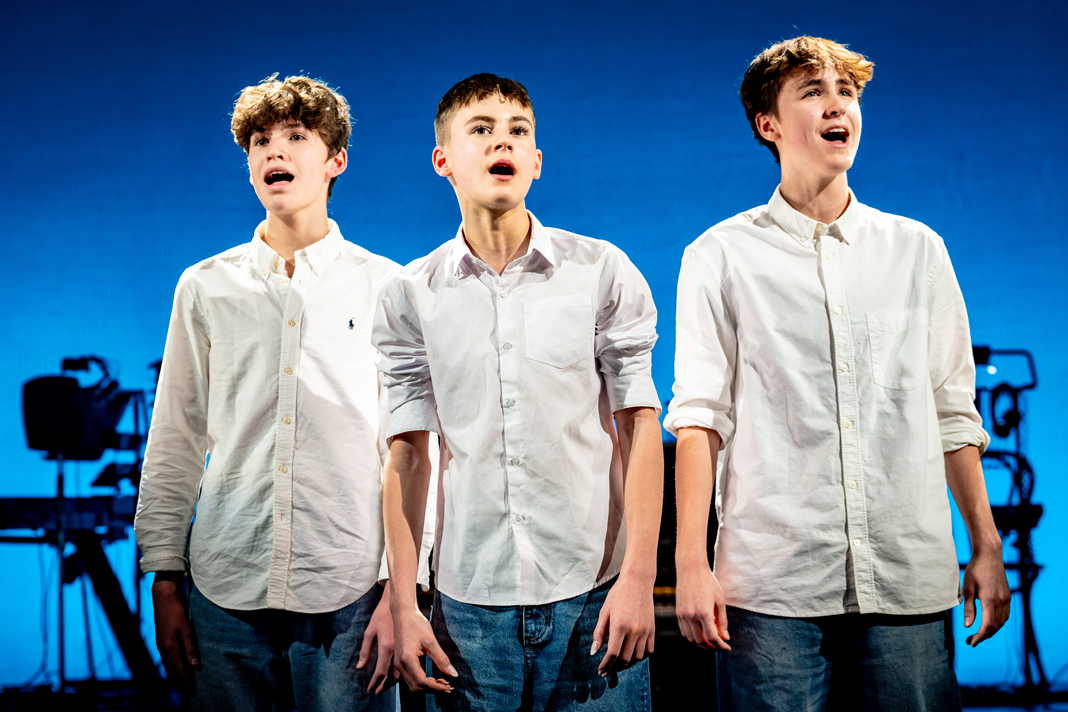
Academics is often the key question prospective parents have, says Charlotte Swingler. “Parents’ main concern is obviously qualifications their child is going to leave here with – we have leant into that.” Alongside the elongated GCSE programme, there are a whole host of initiatives to keep ArtsEd students on point.
Review Weeks before every holiday support knowledge retention, and a comprehensive handbook for each GCSE subject helps students stay on track with course content – also acting as a really useful revision aid. Class sizes here are small (smaller still at GCSE and A level), and there’s plenty of one-to-one time both in class and outside it. Charlotte Swingler describes this as a “little and often” approach to helping children stay on track.
“We have regular catch-ups, rather than leaving it to summer exams,” she adds. “Because we’re a small school we’re able to highlight issues much quicker than a big mainstream schools might. We know all our students by name and staff confer a lot.” There are some popular additions (with parents and students), notably lunchtime academic clubs – drop in clinics to help students in areas they are finding tricky, from complex calculus to conjugating verbs.
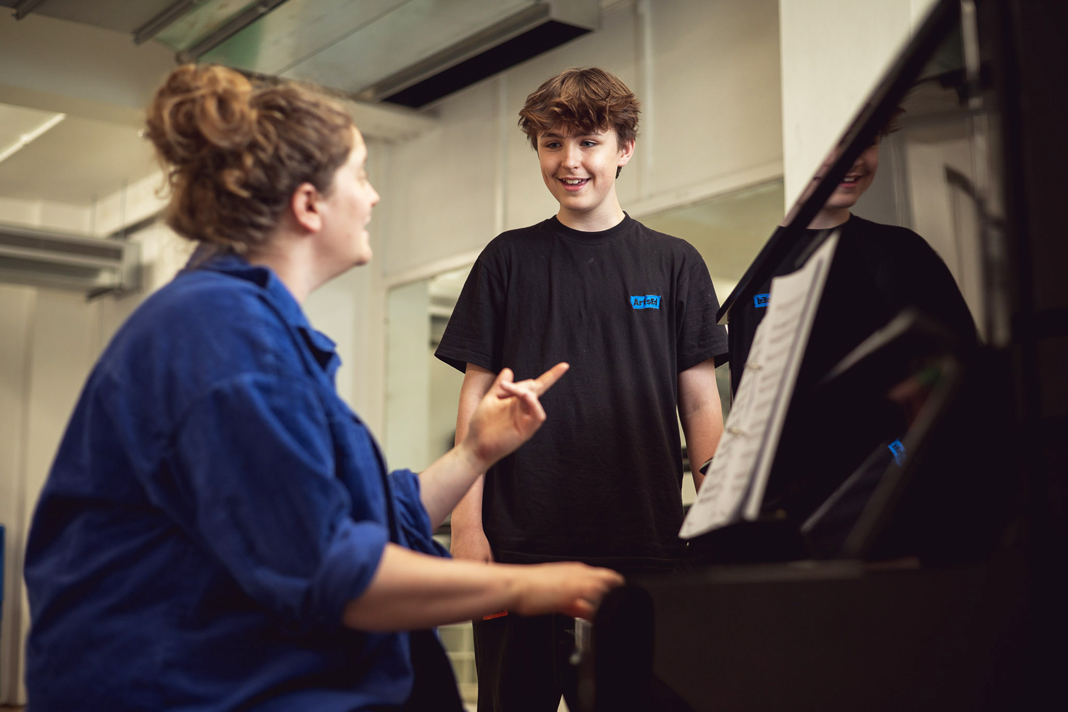
Then there’s ’20-Minute Lock In’, a recent addition where students embark on a sustained period of writing to combat the fine motor skills depletion common among a generation more used to texting. Charlotte Swingler says it’s really helping with handwriting and typing – also spelling, suffering due to predictive text.
One great thing for ArtsEd’s academic team, says Peter Middleton, is that they get to see their students in a different light – which helps them understand and engage. He recalls a new Maths teacher’s awestruck reaction to watching her class shine in a gruelling evening show, then finding them all fresh as daisies and ready for her 8:30am maths test the next day.
“The skills you learn here, like being able to speak in public and work as a team, are really going to stand you in good stead in any kind of work”
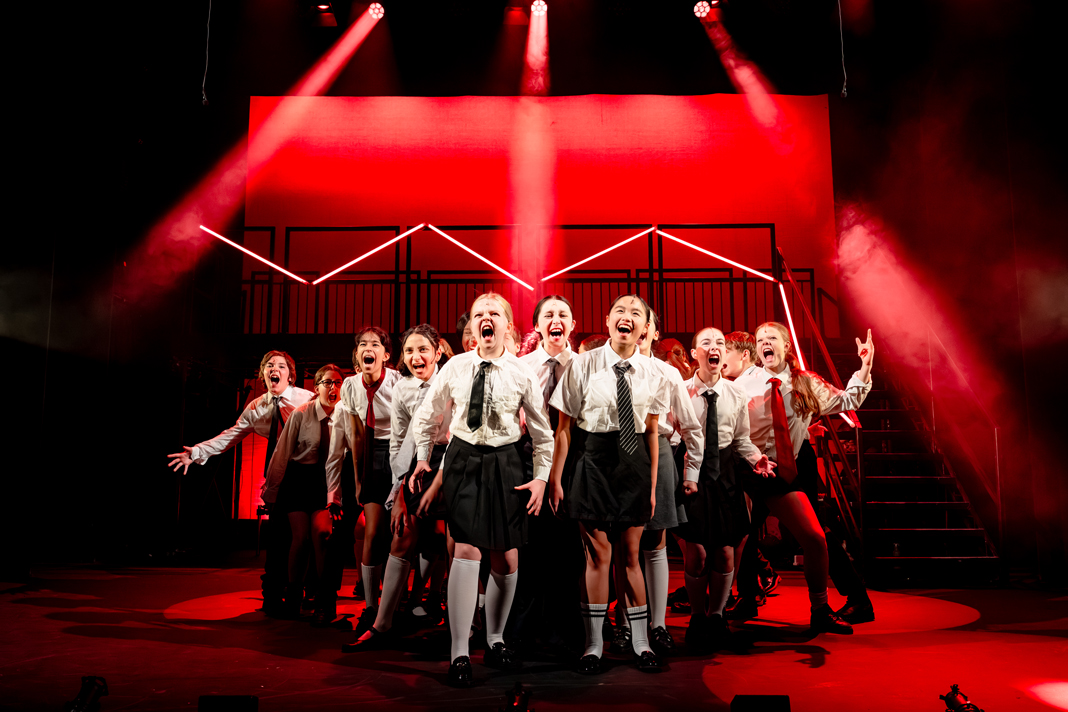
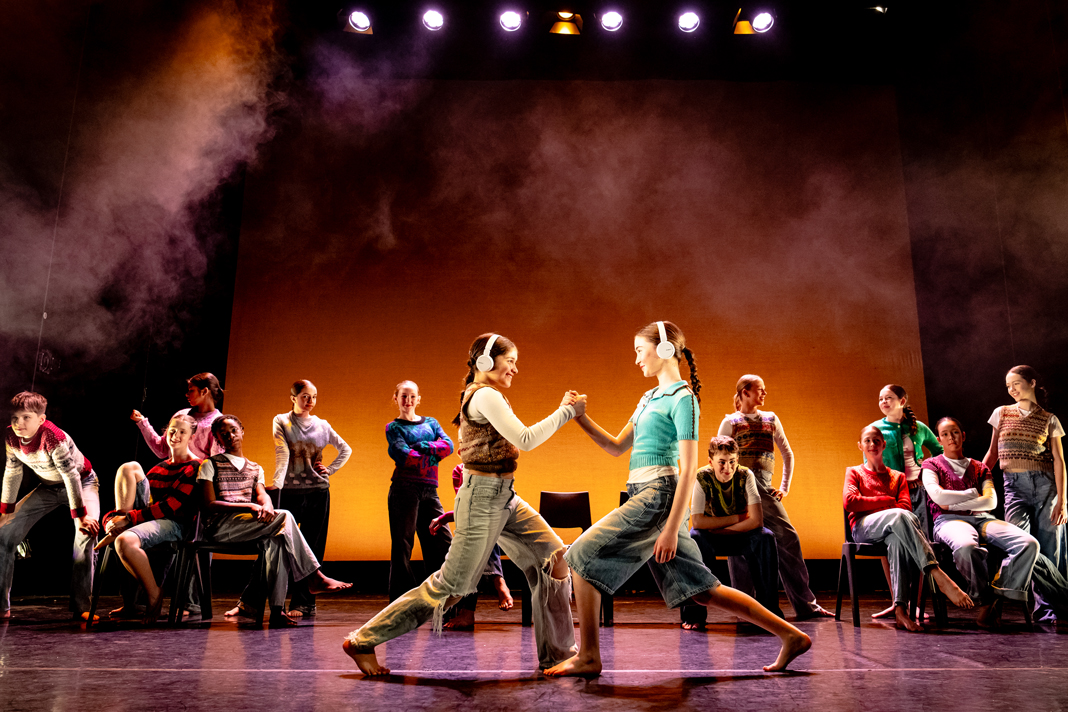
What is implicit in an ArtsEd education is unusual discipline – not imposed from above but generated by students themselves. Their performance schedule is gruelling. Year 7s perform a pantomime in their very first term and from then on in they will take to the stage regularly. There are 70 to 80 different show evenings a year, with a different focus for each term. The logistics are impressive.
For instance, the annual Musical Showcase late in the autumn term runs to five shows and last time round involved 240 different individual performers over two-and-a-half hours. These were professionally staged, impeccably rehearsed numbers – everything from “Greatest Show” to “Old Devil Moon” and “Born This Way”.
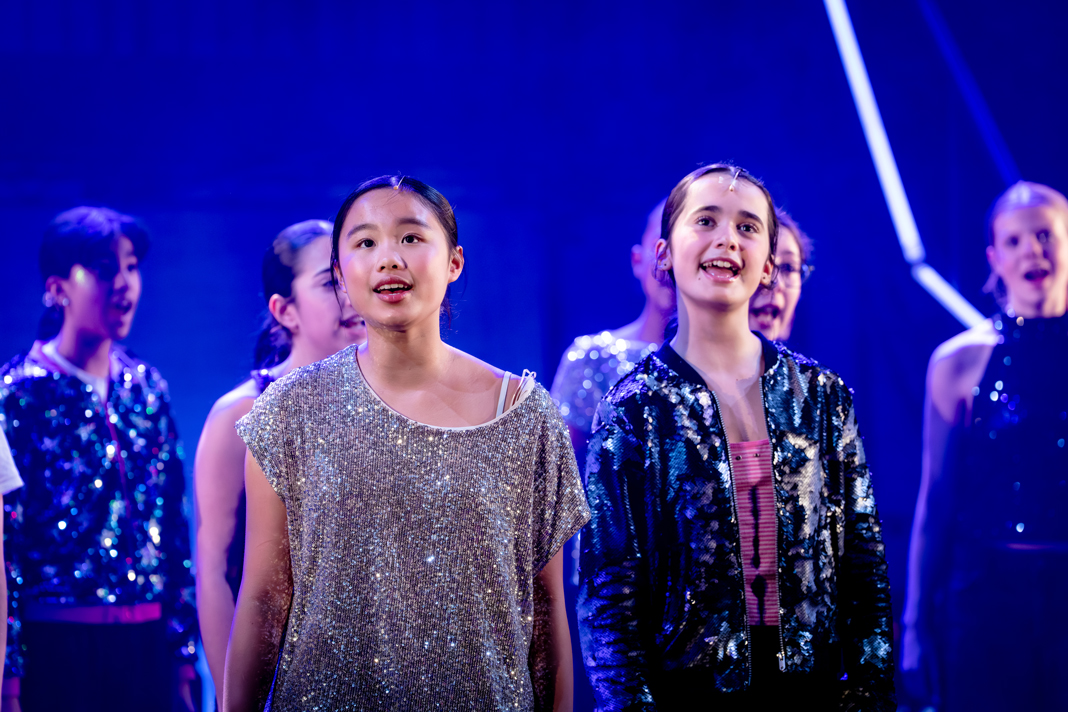
As students embark on their Sixth Form years, it becomes ever more professional, with BTEC and A-level performance requirements. But all students have the opportunity to perform in ArtsEd’s stunning theatre – a professional-quality space staffed for shows by West End technical teams. It’s a special space, beautifully designed. ArtsEd students also take up residence in other theatres (next term it’s the Pleasance) to refine their talent in different settings.
While agents may attend shows, the school has firm policies and a safety-first approach – especially stringent it comes to allowing students out of school for work. There’s an industry liaison point here, so opportunities can be vetted and checked. But more than that, sudents have to draw up their own impact assessment – what it will mean for this rehearsal, that test, and so on.
“Young people are better off in school, so if a young person has the opportunity to do some work they have to put a form in,” says Natalie Bareham. The team are especially vigilant around exam season, also considering the professional value of the experience and the student’s current academic progress. This is, of course, an incentive for students to stay disciplined and stay on track. “It gives them a bit of push to be on time with their work.”

ArtsEd doesn’t recommend agents, but does expose older students to agents’ panels – known and trusted industry professionals willing to pass on wisdom and give pointers on how the performer-agent relationship works. “We want to demystify it, help them understand what they will do for you and what they won’t,” says Peter Middleton. Pastoral and careers support for students is key throughout the ArtsEd journey, and ramped up further in Years 11 and 13, when decisions have to be made about the onward journey. There is specific assistance with the extra elements such as showreels and audition tapes.
This is a school where young people learn resilience while they are young. For instance, they regularly audition for school shows and performances and may often not be picked. ArtsEd doesn’t give feedback except in general group terms. It would be impractical because so many students audition. “And it’s also preparation for the real world,” adds Natalie Bareham.
Most ArtsEd students who stay on at Sixth Form embark on the BTEC Level 3 Extended Diploma, a two-year course equivalent to three A levels. It’s highly regarded in the industry and welcomed by higher education institutions. Last year 70% of the cohort achieved straight D* D* D* (Distinction* – equivalent to three A* grades at A level). “That puts us right up there with the best in the country,” says Peter Middleton.

The starry alumni list testifies to the success of the ArtsEd training – while the number who return to share their insights with the next generation of talent shows the affection alumni feel for their school. There are many star names and rising stars, but also a whole host who won’t be so recognisable outside the industry but are carving glittering careers in music, in choreography or technical and production roles. Some go on to more academic careers – finding a love of English Literature or Theatre during their time here.
“Last year all but nine graduating students went straight on into the industry or into other work or into degrees or conservatoires. The other nine were applying for places at Drama Conservatoires, which like students to be 19 on application.”,” says Peter Middleton. “That tells you we are respected, we are relevant and there is a high level of onward transition into the industry. That is exciting and gives a real buzz to what we do here.”
“What is implicit in an ArtsEd education is unusual discipline – not imposed from above but generated by students themselves”
That buzz is perhaps because young people here are so focused on their future. “They are industry focused, and that wake-up call comes to them very early in their education,” says Natalie Bareham. Peter Middleton believes it’s also down to the approach. “The heart of it comes back to the ArtsEd curriculum, where both the academic and vocational coexist in a symbiotic relationship.”
The fact that students combine academic qualifications with industry-ready skills makes ArtsEd a unique proposition for talented young people who want to explore their creative side, test their talent and keep all doors open. Whatever they decide to do, it’s time well spent. “There are the qualifications on paper, but the wider bit is huge,” says Peter Middleton. “It’s something that is unquantifiable but will set them up for life.”
ArtsEd at a glance
Founded: 1919
Principal: Professor Louise Jackson
Headteacher: Peter Middleton
Gender: Co-ed
Day or boarding: Day
Ages: 11-18
Points of entry: Years 7,8,9 & Year 12
Admissions: Audition, entrance test and interview
Religious affiliation: None
Fees: Day School (Years 7–11) from £7,900 per term (incl. VAT). Sixth Form (Years 12–13)
Fees £26,151 per year (incl. VAT). Audition fee £75
Address: 14 Bath Road, Chiswick, London W4 1LY
artsed.co.uk
Further reading: Focus on St Dunstan’s College
You may also like...