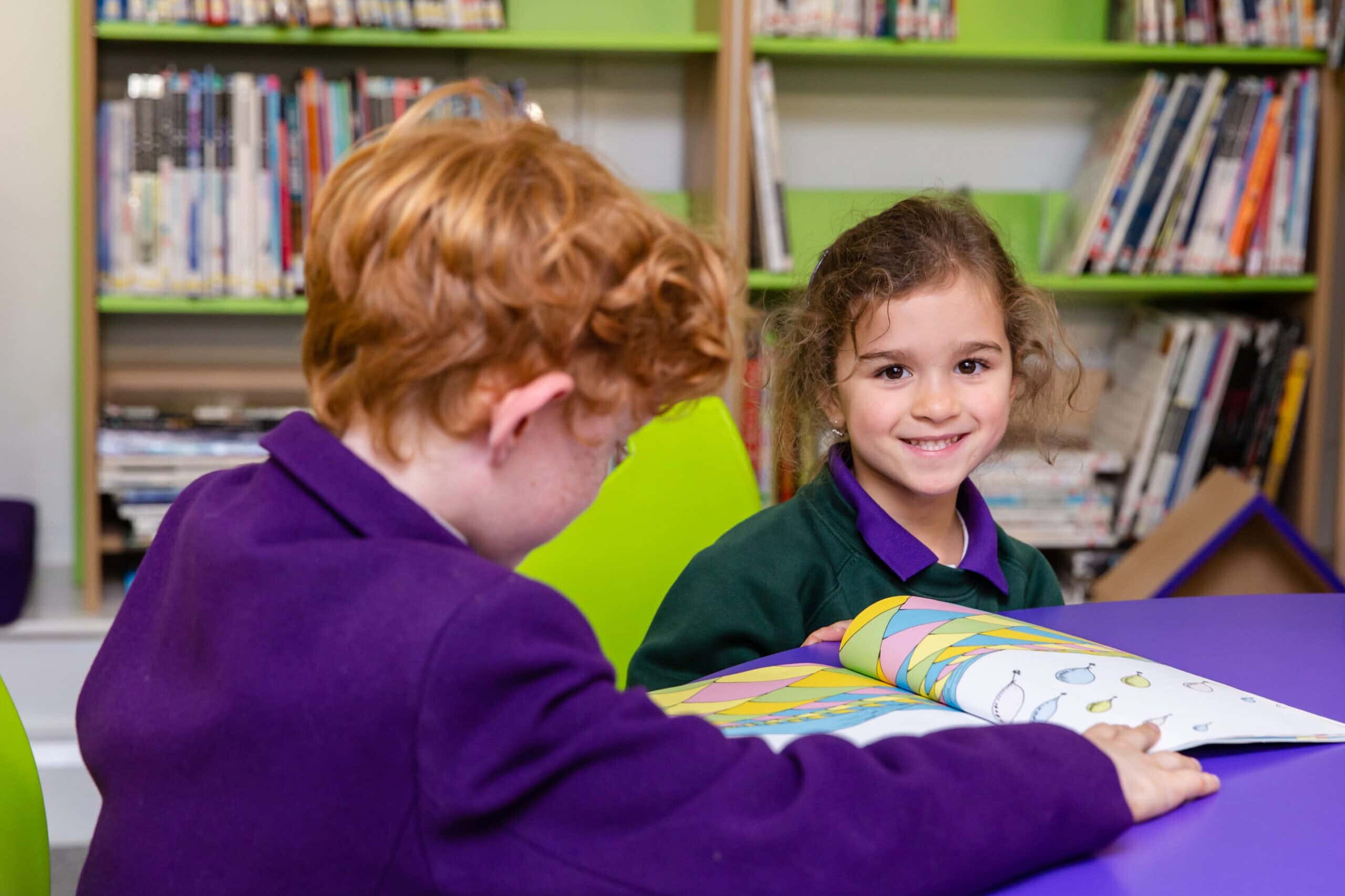
What should we really be looking for when we choose a school? A sense of belonging deserves to sit much higher up the list. Between 2014 and 2022, the proportion of secondary-school pupils who said they liked school “a lot” halved, while England saw a fall of more than 20 percentage points in pupils’ sense of belonging.

That matters for reasons that go well beyond whether a child enjoys going to school. Research has consistently linked wellbeing and learning, while international evidence points to an association between pupils’ sense of belonging and academic achievement.

So perhaps the question for parents isn’t simply, “Where will my child get the best results?” but “Where will they feel known, confident enough to have a go, and supported enough to discover what they’re capable of?” The best schools understand that academic ambition and personal confidence aren’t competing priorities. Very often, one helps unlock the other.

How to choose a school that builds confidence as well as academic success What should we really be looking for when we choose a school? A sense of belonging deserves to sit much higher up the list. Between 2014 and 2022, the proportion of secondary-school pupils who said they liked school “a lot” halved, while England saw a fall of more than 20 percentage points in pupils’ sense of belonging. That matters for reasons that go well beyond whether a child enjoys going to school. Research has consistently linked wellbeing and learning, while international evidence points to an association between pupils’ sense of belonging and academic achievement. So perhaps the question for parents isn’t simply, “Where will my child get the best results?” but “Where will they feel known, confident enough to have a go, and supported enough to discover what they’re capable of?” The best schools understand that academic ambition and personal confidence aren’t competing priorities. Very often, one helps unlock the other. Look for a school where pupils are genuinely known There is an important distinction between a school being small and a school feeling personal. What matters is whether teachers really know their pupils: their strengths, the subjects they find difficult, what motivates them and when something isn't quite right. On a school visit, observe the everyday interactions as much as the formal presentation. Do staff greet pupils by name? Do pupils seem comfortable talking to teachers? When you ask about pastoral care, are you given specific examples of how it works in practice rather than simply shown an organisational chart? Strong pastoral care shouldn't sit separately from academic life. Feeling that they belong can give children the security to take intellectual risks and the resilience to cope when things don't immediately go their way. For some pupils, particularly those who are less likely to put themselves forward, being properly known can be transformative. It’s an approach that resonates at The Oratory School, a co-educational day and boarding school in Oxfordshire. Its relatively small community is designed to give staff the opportunity to know pupils as individuals, academically, pastorally and beyond the classroom. INSERT QUOTE FROM ORATORY HERE Ask what the academic results really tell you Excellent exam results are reassuring, but they don't always tell the whole story. One useful question is not simply, “What grades do pupils achieve?” but, “How much progress do they make while they are here?” Value-added data can be particularly revealing because it considers pupils' outcomes in relation to their starting points. If pupils routinely make more progress than might have been predicted when they arrived, that can tell you something headline grades cannot: how effectively a school helps individual children develop academically. It is also worth looking for breadth. Does achievement extend across sciences, humanities, languages, creative subjects and design? A genuinely all-round education recognises that ability comes in many forms. A pupil who discovers an aptitude for art, engineering, drama or design may gain confidence that then spills over into other areas of school life. Ask, too, what happens when a child struggles. The most useful answer isn't necessarily about extra lessons; listen for evidence that teachers identify difficulties early, understand the individual and help pupils develop the tools to move forward independently. Find out whether children have room to become themselves Confidence is not the same as being extroverted. A confident school community should make room for the quiet mathematician, the enthusiastic actor, the committed athlete and the child who hasn't yet discovered what their “thing” is. This is where life beyond lessons becomes important. The pitch, stage, studio or debating chamber can give children different arenas in which to take risks, experience success, deal with setbacks and discover where they shine. Look beyond the length of the activities list and ask who actually participates. Are opportunities dominated by a small group of exceptionally talented pupils, or are children at different levels encouraged to get involved? Does the school celebrate improvement and commitment alongside trophies and first places? One thing worth asking is how easy it is for every pupil (not just the star performer or first-team player) to get involved. In some school communities, pupils may find themselves taking part rather than watching from the sidelines. Being selected for a team, performing on stage or taking responsibility for something can have an impact on a young person's self-belief that reaches far beyond that particular activity. INSERT QUOTE FROM ORATORY HERE Consider the culture around success Every school communicates, consciously or otherwise, what it values. Spend time working out what “success” appears to mean at the schools you visit. Academic ambition is important, but an environment focused solely on grades can make children reluctant to fail. By contrast, a healthy culture sets high expectations while recognising that progress involves mistakes, perseverance and occasionally changing direction. Listen to how staff talk about pupils. Do they discuss character, curiosity, kindness and confidence as readily as results? Ask pupils what they are proud of and what happens when something goes wrong. Their answers can reveal a great deal about whether achievement is driven predominantly by pressure or by encouragement. The ideal is not a school that promises children an easy ride. Confidence grows through appropriate challenge: attempting something difficult, receiving the right support and discovering that you can do more than you expected. If boarding is an option, ask what community really means For families considering boarding, there is another dimension to explore. Don't just ask what proportion of pupils board; ask what that means for the rhythm of school life. How do boarding and day pupils mix during lessons, activities, sport and social time? Schools organise boarding in very different ways, and parents should understand how that shapes friendships and school life. Look at weekends and evenings as well as the school day, and ask pupils themselves about friendships across the two groups. A cohesive community can create a powerful sense of belonging, particularly when children feel that they are part of school life rather than one category within it. INSERT QUOTE FROM ORATORY HERE Watch the pupils, not just the presentation Open days are designed to show schools at their best, so some of the most valuable evidence can be found in the moments that haven't been scripted. Watch pupils walking between lessons. How do they interact with one another and with adults? Do younger children appear comfortable around older pupils? Are the pupils showing you around able to speak naturally about what they enjoy — and what they find challenging? Try asking questions that can't easily be answered with a statistic: “When did a teacher last encourage you to do something you didn't think you could do?” “What happens if you're having a difficult week?” or “What's something you've tried here that you would never have imagined yourself doing before?” The answers may tell you more about a school's culture than a prospectus ever could. Choose the place where your child can grow Ultimately, the best school is not necessarily the one with the longest list of accolades. It is the one in which your particular child is most likely to flourish. Look for evidence of strong academic teaching, certainly, but place it alongside pastoral care, breadth of opportunity, community and the quality of relationships between pupils and staff. Ask whether achievement is simply expected or actively nurtured, and whether children are given enough support to feel secure while still being challenged to stretch themselves. Because the right school shouldn't simply help your child achieve good results. It should give them enough confidence to find out what they're capable of, and enough opportunities to surprise themselves along the way.

Look for a school where pupils are genuinely known

There is an important distinction between a school being small and a school feeling personal. What matters is whether teachers really know their pupils: their strengths, the subjects they find difficult, what motivates them and when something isn’t quite right.

On a school visit, observe the everyday interactions as much as the formal presentation. Do staff greet pupils by name? Do pupils seem comfortable talking to teachers? When you ask about pastoral care, are you given specific examples of how it works in practice rather than simply shown an organisational chart?

Strong pastoral care shouldn’t sit separately from academic life. Feeling that they belong can give children the security to take intellectual risks and the resilience to cope when things don’t immediately go their way. For some pupils, particularly those who are less likely to put themselves forward, being properly known can be transformative.

It’s an approach that resonates at The Oratory School, a co-educational day and boarding school in Oxfordshire. Its relatively small community is designed to give staff the opportunity to know pupils as individuals, academically, pastorally and beyond the classroom.

“At The Oratory, we have created an atmosphere that is challenging yet not intimidating, because education here happens one pupil at a time. We have the time to discover each individual’s innate gifts and qualities, and help them to be themselves with the confidence to become more. In line with our ethos of ‘Be you. Become more.”

How to choose a school that builds confidence as well as academic success What should we really be looking for when we choose a school? A sense of belonging deserves to sit much higher up the list. Between 2014 and 2022, the proportion of secondary-school pupils who said they liked school “a lot” halved, while England saw a fall of more than 20 percentage points in pupils’ sense of belonging. That matters for reasons that go well beyond whether a child enjoys going to school. Research has consistently linked wellbeing and learning, while international evidence points to an association between pupils’ sense of belonging and academic achievement. So perhaps the question for parents isn’t simply, “Where will my child get the best results?” but “Where will they feel known, confident enough to have a go, and supported enough to discover what they’re capable of?” The best schools understand that academic ambition and personal confidence aren’t competing priorities. Very often, one helps unlock the other. Look for a school where pupils are genuinely known There is an important distinction between a school being small and a school feeling personal. What matters is whether teachers really know their pupils: their strengths, the subjects they find difficult, what motivates them and when something isn't quite right. On a school visit, observe the everyday interactions as much as the formal presentation. Do staff greet pupils by name? Do pupils seem comfortable talking to teachers? When you ask about pastoral care, are you given specific examples of how it works in practice rather than simply shown an organisational chart? Strong pastoral care shouldn't sit separately from academic life. Feeling that they belong can give children the security to take intellectual risks and the resilience to cope when things don't immediately go their way. For some pupils, particularly those who are less likely to put themselves forward, being properly known can be transformative. It’s an approach that resonates at The Oratory School, a co-educational day and boarding school in Oxfordshire. Its relatively small community is designed to give staff the opportunity to know pupils as individuals, academically, pastorally and beyond the classroom. INSERT QUOTE FROM ORATORY HERE Ask what the academic results really tell you Excellent exam results are reassuring, but they don't always tell the whole story. One useful question is not simply, “What grades do pupils achieve?” but, “How much progress do they make while they are here?” Value-added data can be particularly revealing because it considers pupils' outcomes in relation to their starting points. If pupils routinely make more progress than might have been predicted when they arrived, that can tell you something headline grades cannot: how effectively a school helps individual children develop academically. It is also worth looking for breadth. Does achievement extend across sciences, humanities, languages, creative subjects and design? A genuinely all-round education recognises that ability comes in many forms. A pupil who discovers an aptitude for art, engineering, drama or design may gain confidence that then spills over into other areas of school life. Ask, too, what happens when a child struggles. The most useful answer isn't necessarily about extra lessons; listen for evidence that teachers identify difficulties early, understand the individual and help pupils develop the tools to move forward independently. Find out whether children have room to become themselves Confidence is not the same as being extroverted. A confident school community should make room for the quiet mathematician, the enthusiastic actor, the committed athlete and the child who hasn't yet discovered what their “thing” is. This is where life beyond lessons becomes important. The pitch, stage, studio or debating chamber can give children different arenas in which to take risks, experience success, deal with setbacks and discover where they shine. Look beyond the length of the activities list and ask who actually participates. Are opportunities dominated by a small group of exceptionally talented pupils, or are children at different levels encouraged to get involved? Does the school celebrate improvement and commitment alongside trophies and first places? One thing worth asking is how easy it is for every pupil (not just the star performer or first-team player) to get involved. In some school communities, pupils may find themselves taking part rather than watching from the sidelines. Being selected for a team, performing on stage or taking responsibility for something can have an impact on a young person's self-belief that reaches far beyond that particular activity. INSERT QUOTE FROM ORATORY HERE Consider the culture around success Every school communicates, consciously or otherwise, what it values. Spend time working out what “success” appears to mean at the schools you visit. Academic ambition is important, but an environment focused solely on grades can make children reluctant to fail. By contrast, a healthy culture sets high expectations while recognising that progress involves mistakes, perseverance and occasionally changing direction. Listen to how staff talk about pupils. Do they discuss character, curiosity, kindness and confidence as readily as results? Ask pupils what they are proud of and what happens when something goes wrong. Their answers can reveal a great deal about whether achievement is driven predominantly by pressure or by encouragement. The ideal is not a school that promises children an easy ride. Confidence grows through appropriate challenge: attempting something difficult, receiving the right support and discovering that you can do more than you expected. If boarding is an option, ask what community really means For families considering boarding, there is another dimension to explore. Don't just ask what proportion of pupils board; ask what that means for the rhythm of school life. How do boarding and day pupils mix during lessons, activities, sport and social time? Schools organise boarding in very different ways, and parents should understand how that shapes friendships and school life. Look at weekends and evenings as well as the school day, and ask pupils themselves about friendships across the two groups. A cohesive community can create a powerful sense of belonging, particularly when children feel that they are part of school life rather than one category within it. INSERT QUOTE FROM ORATORY HERE Watch the pupils, not just the presentation Open days are designed to show schools at their best, so some of the most valuable evidence can be found in the moments that haven't been scripted. Watch pupils walking between lessons. How do they interact with one another and with adults? Do younger children appear comfortable around older pupils? Are the pupils showing you around able to speak naturally about what they enjoy — and what they find challenging? Try asking questions that can't easily be answered with a statistic: “When did a teacher last encourage you to do something you didn't think you could do?” “What happens if you're having a difficult week?” or “What's something you've tried here that you would never have imagined yourself doing before?” The answers may tell you more about a school's culture than a prospectus ever could. Choose the place where your child can grow Ultimately, the best school is not necessarily the one with the longest list of accolades. It is the one in which your particular child is most likely to flourish. Look for evidence of strong academic teaching, certainly, but place it alongside pastoral care, breadth of opportunity, community and the quality of relationships between pupils and staff. Ask whether achievement is simply expected or actively nurtured, and whether children are given enough support to feel secure while still being challenged to stretch themselves. Because the right school shouldn't simply help your child achieve good results. It should give them enough confidence to find out what they're capable of, and enough opportunities to surprise themselves along the way.

Ask what the academic results really tell you

Excellent exam results are reassuring, but they don’t always tell the whole story. One useful question is not simply, “What grades do pupils achieve?” but, “How much progress do they make while they are here?”

Value-added data can be particularly revealing because it considers pupils’ outcomes in relation to their starting points. If pupils routinely make more progress than might have been predicted when they arrived, that can tell you something headline grades cannot: how effectively a school helps individual children develop academically.

It is also worth looking for breadth. Does achievement extend across sciences, humanities, languages, creative subjects and design? A genuinely all-round education recognises that ability comes in many forms. A pupil who discovers an aptitude for art, engineering, drama or design may gain confidence that then spills over into other areas of school life.

Ask, too, what happens when a child struggles. The most useful answer isn’t necessarily about extra lessons; listen for evidence that teachers identify difficulties early, understand the individual and help pupils develop the tools to move forward independently.

Find out whether children have room to become themselves

Confidence is not the same as being extroverted. A confident school community should make room for the quiet mathematician, the enthusiastic actor, the committed athlete and the child who hasn’t yet discovered what their “thing” is.

This is where life beyond lessons becomes important. The pitch, stage, studio or debating chamber can give children different arenas in which to take risks, experience success, deal with setbacks and discover where they shine.

Look beyond the length of the activities list and ask who actually participates. Are opportunities dominated by a small group of exceptionally talented pupils, or are children at different levels encouraged to get involved? Does the school celebrate improvement and commitment alongside trophies and first places?

One thing worth asking is how easy it is for every pupil (not just the star performer or first-team player) to get involved. In some school communities, pupils may find themselves taking part rather than watching from the sidelines. Being selected for a team, performing on stage or taking responsibility for something can have an impact on a young person’s self-belief that reaches far beyond that particular activity.

“The Oratory’s smaller school environment means that every pupil has the chance to be involved and find the confidence to excel. We see the best in people, so that each finds a place at the top of their tree. Think of us as a greenhouse, where growth and flourishing happen naturally in a place of joy and safety. We know that once the flip of enthusiasm is flipped, the pupil who becomes good at one thing quickly becomes good at another. This is why our pupils perform beyond expectation and come together to achieve extraordinary things, proven by our top 10 value-added scores and success on the sports fields against much larger schools.”

How to choose a school that builds confidence as well as academic success What should we really be looking for when we choose a school? A sense of belonging deserves to sit much higher up the list. Between 2014 and 2022, the proportion of secondary-school pupils who said they liked school “a lot” halved, while England saw a fall of more than 20 percentage points in pupils’ sense of belonging. That matters for reasons that go well beyond whether a child enjoys going to school. Research has consistently linked wellbeing and learning, while international evidence points to an association between pupils’ sense of belonging and academic achievement. So perhaps the question for parents isn’t simply, “Where will my child get the best results?” but “Where will they feel known, confident enough to have a go, and supported enough to discover what they’re capable of?” The best schools understand that academic ambition and personal confidence aren’t competing priorities. Very often, one helps unlock the other. Look for a school where pupils are genuinely known There is an important distinction between a school being small and a school feeling personal. What matters is whether teachers really know their pupils: their strengths, the subjects they find difficult, what motivates them and when something isn't quite right. On a school visit, observe the everyday interactions as much as the formal presentation. Do staff greet pupils by name? Do pupils seem comfortable talking to teachers? When you ask about pastoral care, are you given specific examples of how it works in practice rather than simply shown an organisational chart? Strong pastoral care shouldn't sit separately from academic life. Feeling that they belong can give children the security to take intellectual risks and the resilience to cope when things don't immediately go their way. For some pupils, particularly those who are less likely to put themselves forward, being properly known can be transformative. It’s an approach that resonates at The Oratory School, a co-educational day and boarding school in Oxfordshire. Its relatively small community is designed to give staff the opportunity to know pupils as individuals, academically, pastorally and beyond the classroom. INSERT QUOTE FROM ORATORY HERE Ask what the academic results really tell you Excellent exam results are reassuring, but they don't always tell the whole story. One useful question is not simply, “What grades do pupils achieve?” but, “How much progress do they make while they are here?” Value-added data can be particularly revealing because it considers pupils' outcomes in relation to their starting points. If pupils routinely make more progress than might have been predicted when they arrived, that can tell you something headline grades cannot: how effectively a school helps individual children develop academically. It is also worth looking for breadth. Does achievement extend across sciences, humanities, languages, creative subjects and design? A genuinely all-round education recognises that ability comes in many forms. A pupil who discovers an aptitude for art, engineering, drama or design may gain confidence that then spills over into other areas of school life. Ask, too, what happens when a child struggles. The most useful answer isn't necessarily about extra lessons; listen for evidence that teachers identify difficulties early, understand the individual and help pupils develop the tools to move forward independently. Find out whether children have room to become themselves Confidence is not the same as being extroverted. A confident school community should make room for the quiet mathematician, the enthusiastic actor, the committed athlete and the child who hasn't yet discovered what their “thing” is. This is where life beyond lessons becomes important. The pitch, stage, studio or debating chamber can give children different arenas in which to take risks, experience success, deal with setbacks and discover where they shine. Look beyond the length of the activities list and ask who actually participates. Are opportunities dominated by a small group of exceptionally talented pupils, or are children at different levels encouraged to get involved? Does the school celebrate improvement and commitment alongside trophies and first places? One thing worth asking is how easy it is for every pupil (not just the star performer or first-team player) to get involved. In some school communities, pupils may find themselves taking part rather than watching from the sidelines. Being selected for a team, performing on stage or taking responsibility for something can have an impact on a young person's self-belief that reaches far beyond that particular activity. INSERT QUOTE FROM ORATORY HERE Consider the culture around success Every school communicates, consciously or otherwise, what it values. Spend time working out what “success” appears to mean at the schools you visit. Academic ambition is important, but an environment focused solely on grades can make children reluctant to fail. By contrast, a healthy culture sets high expectations while recognising that progress involves mistakes, perseverance and occasionally changing direction. Listen to how staff talk about pupils. Do they discuss character, curiosity, kindness and confidence as readily as results? Ask pupils what they are proud of and what happens when something goes wrong. Their answers can reveal a great deal about whether achievement is driven predominantly by pressure or by encouragement. The ideal is not a school that promises children an easy ride. Confidence grows through appropriate challenge: attempting something difficult, receiving the right support and discovering that you can do more than you expected. If boarding is an option, ask what community really means For families considering boarding, there is another dimension to explore. Don't just ask what proportion of pupils board; ask what that means for the rhythm of school life. How do boarding and day pupils mix during lessons, activities, sport and social time? Schools organise boarding in very different ways, and parents should understand how that shapes friendships and school life. Look at weekends and evenings as well as the school day, and ask pupils themselves about friendships across the two groups. A cohesive community can create a powerful sense of belonging, particularly when children feel that they are part of school life rather than one category within it. INSERT QUOTE FROM ORATORY HERE Watch the pupils, not just the presentation Open days are designed to show schools at their best, so some of the most valuable evidence can be found in the moments that haven't been scripted. Watch pupils walking between lessons. How do they interact with one another and with adults? Do younger children appear comfortable around older pupils? Are the pupils showing you around able to speak naturally about what they enjoy — and what they find challenging? Try asking questions that can't easily be answered with a statistic: “When did a teacher last encourage you to do something you didn't think you could do?” “What happens if you're having a difficult week?” or “What's something you've tried here that you would never have imagined yourself doing before?” The answers may tell you more about a school's culture than a prospectus ever could. Choose the place where your child can grow Ultimately, the best school is not necessarily the one with the longest list of accolades. It is the one in which your particular child is most likely to flourish. Look for evidence of strong academic teaching, certainly, but place it alongside pastoral care, breadth of opportunity, community and the quality of relationships between pupils and staff. Ask whether achievement is simply expected or actively nurtured, and whether children are given enough support to feel secure while still being challenged to stretch themselves. Because the right school shouldn't simply help your child achieve good results. It should give them enough confidence to find out what they're capable of, and enough opportunities to surprise themselves along the way.

Consider the culture around success

Every school communicates, consciously or otherwise, what it values. Spend time working out what “success” appears to mean at the schools you visit.

Academic ambition is important, but an environment focused solely on grades can make children reluctant to fail. By contrast, a healthy culture sets high expectations while recognising that progress involves mistakes, perseverance and occasionally changing direction.

Listen to how staff talk about pupils. Do they discuss character, curiosity, kindness and confidence as readily as results? Ask pupils what they are proud of and what happens when something goes wrong. Their answers can reveal a great deal about whether achievement is driven predominantly by pressure or by encouragement.

The ideal is not a school that promises children an easy ride. Confidence grows through appropriate challenge: attempting something difficult, receiving the right support and discovering that you can do more than you expected.

Image supplied by Oratory School | confidence in school

If boarding is an option, ask what community really means

For families considering boarding, there is another dimension to explore. Don’t just ask what proportion of pupils board; ask what that means for the rhythm of school life. How do boarding and day pupils mix during lessons, activities, sport and social time?

Schools organise boarding in very different ways, and parents should understand how that shapes friendships and school life. Look at weekends and evenings as well as the school day, and ask pupils themselves about friendships across the two groups. A cohesive community can create a powerful sense of belonging, particularly when children feel that they are part of school life rather than one category within it.

“At The Oratory, our integrated House system for day and boarding pupils provides inclusivity and a sense of belonging. Boarders and day pupils work and socialise together and join in a wide array of evening and weekend activities that create a real community vibe within our ‘Oratory Family.”

Image supplied by Oratory School | confidence in school

Watch the pupils, not just the presentation

Open days are designed to show schools at their best, so some of the most valuable evidence can be found in the moments that haven’t been scripted.

Watch pupils walking between lessons. How do they interact with one another and with adults? Do younger children appear comfortable around older pupils? Are the pupils showing you around able to speak naturally about what they enjoy — and what they find challenging?

Try asking questions that can’t easily be answered with a statistic: “When did a teacher last encourage you to do something you didn’t think you could do?” “What happens if you’re having a difficult week?” or “What’s something you’ve tried here that you would never have imagined yourself doing before?”

The answers may tell you more about a school’s culture than a prospectus ever could.

Image supplied by Oratory School | confidence in school

Choose the place where your child can grow

Ultimately, the best school is not necessarily the one with the longest list of accolades. It is the one in which your particular child is most likely to flourish.

Look for evidence of strong academic teaching, certainly, but place it alongside pastoral care, breadth of opportunity, community and the quality of relationships between pupils and staff. Ask whether achievement is simply expected or actively nurtured, and whether children are given enough support to feel secure while still being challenged to stretch themselves.

Because the right school shouldn’t simply help your child achieve good results. It should give them enough confidence to find out what they’re capable of, and enough opportunities to surprise themselves along the way.

This is a sponsored post created in collaboration withI The Oratory School, an ndependent Catholic Boarding and Day School for Girls & Boys Aged 11-18 in Woodcote, Oxfordshire.

oratory.co.uk

Read more school news here.

You may also like...