
Short courses from UKSA offer a fast track to the ocean – perfect for anyone looking to fund gap-year travel and build transferable work skills
The UK Sailing Academy is renowned as a maritime training provider – offering everything from courses to school children right up to long-term careers training for professional roles in the fast-growing and well-paid maritime industries.
For students embarking on the next stage – perhaps that year off before university or to think about the next step – it’s the three- and four-week courses that present an accessible opportunity. In a month, you could be on your way to a well-paid gap-year adventure. What’s more, you’ll get useful transferable job skills under your belt, plus a potential pathway to return to and build on in the future. These short course options centre on skills that are in high demand in the maritime industry. You can be trained to take on an entry-level role as a deckhand, steward/ess or engineer on a superyacht. It’s already a popular option with those in the know – often people who already love sailing and watersports.
Superyacht Deckhand Training, for instance, is a course that takes three weeks (August, October and November start dates) and gives you the qualification to join the crew and become responsible for the maintenance and upkeep of superyachts. “A typical day on charter starts with full window, stainless steel and deck clean downs, followed by a mix of tasks including launching or recovering tender and tendering guests to and from the shore. I will then assist with navigation and taking watch while underway and dropping/pulling anchor,” says UKSA Superyacht Deckhand Training graduate Will Jones.
“We run with a small crew so I will also help with repairs, interior clean downs and navigation efforts. In the off-season, I have carried out interior and exterior fibreglass repairs, painting, wood restoration – and lots of siliconing!”
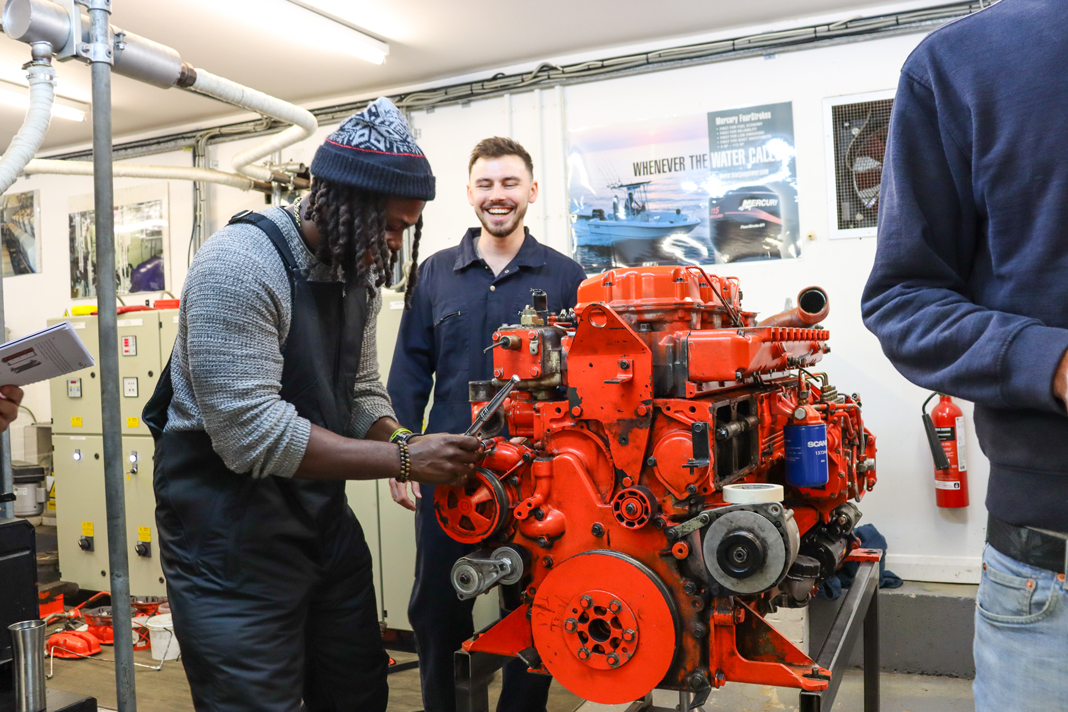
A separate UKSA four-week course, Engineer Deckhand Training, is a dual role to prepare students to become versatile and useful crew members on smaller vessels. Areas covered include mooring, tender driving maintenance and operations, with below-deck training in routine checks, basic repairs and engine and auxiliary systems upkeep.
If front-of-house sounds more your thing then Superyacht Steward/ess Training is a course that takes up to four weeks. It’s a combination of essential safety certifications to work on board a superyacht, alongside hands-on hospitality training and soft skills development. It’s fast-paced and you are expected to deliver five-star service – everything from guest schedule planning and cocktail making to table service, housekeeping and ensuring a spotless yacht interior. There’s an optional advanced module with the British Butler Institute to provide intensive luxury front-of-house training.
For UKSA graduate Emily Preece it was an exciting journey combining everything from fireground training for the STCW (Standards of Training, Certification and Watchkeeping certificate) to learning to arrange flowers with aplomb. “Since leaving UKSA my life has involved a lot of service, a lot of flower arranging, cocktail making and crew management,” she says.
“A typical day for me starts with answering emails, breakfast service and liaising with guests for the day’s plans. Lunch comes next, followed by cocktails and canapés before we set for dinner. Once dinner and digestif has been served and cleared, I will head back to my cabin to finish off some admin and look at schedules and plans for the next day.”
“In a month, you could be on your way to a well-paid gap-year adventure – with useful transferable skills under your belt”
You can be ready to set sail in around a month, so what about earnings? Whether you are working for a private yacht or a charter company you can expect to take home between €2,000-€3,500 a month, with many living expenses covered. The average starting salary for a trained deckhand or steward/stewardess is currently €2,800, while junior engineers are typically paid a fair bit more. On top of salary, crew often receive generous tips from happy guests.
The final question is – how easy is it to get a job? The answer is that this is a growth industry, with 50,000 ships in operation across the globe and almost 600 superyachts planned for launch this year alone. There are diverse roles across the maritime industry – including cruise ships, work boats and windfarms – so there’s scope to get experience in multiple locations and settings.
The UKSA hosts open days every month where the team provide information on courses and the various industry paths, whether you are looking at a gap year working abroad or considering a longer-term role in the maritime industries. Students can get informed perspectives on possible pathways, individualised careers support and assistance with CV preparation. Training is delivered at UKSA’s campus at Cowes, Isle of Wight, where students live and learn right on the waterfront.
UKSA uksa.org
Further reading: University choices – beyond the ‘Big Four’
You may also like...