James Duffield, Headmaster of Shropshire co-ed school Moor Park,on why a modern prep education remains as relevant as ever
With the announcement of yet more British prep school closures, one is led to question both the value and relevance of the classic British model. It may help to look back to the founding principles, and indeed the very word prep – preparatory – from the Latin, parāre, meaning ‘to make ready’. Beyond the endless marketing around small class numbers, playing fields, extracurricular enrichment and examination results, there lies a more subtle, and perhaps powerful, reason that prep schools really are the best education we can offer our young children.
None of us really know what the world into which these young people will emerge might look like. What we do know is that the protection of their youth, their innocence, and their inherent love of life is of the utmost importance. Perhaps a good modern Prep does as much to preserve childhood as it does to prepare a child for the future. Jonathan Haidt, in his well-documented and increasingly popular book The Anxious Generation, tries to make clear the damage being caused to a generation of children who are overprotected in the real world but insufficiently protected in the virtual one. Haidt goes on to say that childhood is increasingly phone rather than play based.
The loss of childhood is well documented, but the solution is a little less obvious. It lies partly in space, in every sense of the word. It means allowing children both physical and mental room to explore their world, giving them the opportunities to make mistakes, to understand that they will fail before they succeed, while providing an environment of care and compassion in which to make these discoveries. Throughout this process, children learn the skills required for an unknown world of technological advance and change – able to adapt, to slow down when necessary and to find the capacity to solve problems.
“The opportunities for a child at school for 10 hours a day need no explanation. But many of the benefits are to be found in down time”
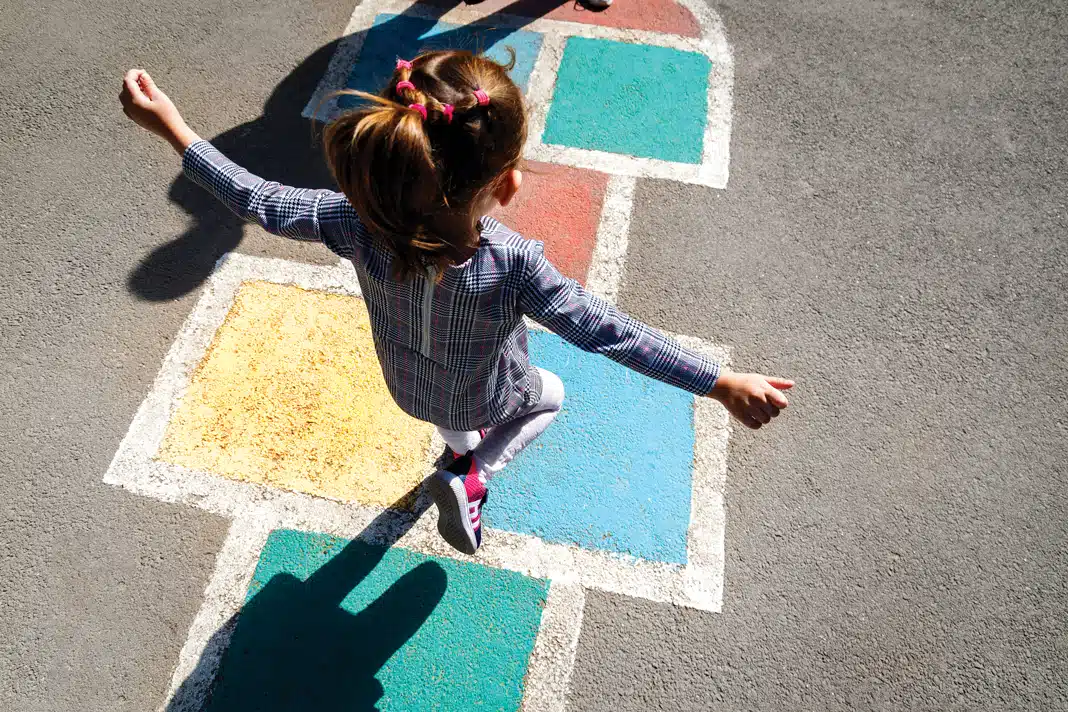
Another vital ingredient is participation. When children are at school with their peers and without their phones they socialise, play games and learn to appreciate their environment. The extracurricular opportunities for a child at school for 10 hours a day need no explanation. But many of the benefits are to be found in down time, free time, golden time – call it what you will. This time gives children the space to create their own games, to just be with each other, to make choices and to learn away from their screens. Surely, in a screen-based world, this is as important as formal education?
An equally important facet of prep school life is the smooth transition during Key Stage 3, which affords more time, and therefore less pressure. There are also many benefits of being in an environment where the oldest pupils are 13. Children reach the top of the tree, become the big fish in the small pond – with all the responsibilities and achievements this entails. They then start anew, with all the tools gained, in the next stage of their education.
Modern preps understand that the important thing is not the finished product but supporting the progression of childhood. It is increasingly important that children be allowed to develop at their own pace, and prep school provides them with the support, protection and preparation to do just this.
Moor Park School moorpark.org.uk
Further reading: How early education helps children build resilience
You may also like...
StickySEN,Senior,SEN,Insight,Insight,SEN,Insight,Prep,Sixth Form,SEN
Could art reduce School exclusions?
0 Comments10 Minutes