Knowledge acquisition sits at the heart of education, says the Head of Rugby School Gareth Parker-Jones, but learning how to use that knowledge wisely matters even more
Acquiring knowledge is not straightforward – it is a subtle and personal experience for every child. It requires patient and imaginative teachers, and a variety of sources and approaches.
For example, in subjects such as science, technology and maths, there are often right and wrong answers (the right ones are more usefully arrived at if you know how you got there). Arts subjects, on the other hand, require a process of interpretation, and students need to gain the confidence to express and defend their personal evaluations.
What is the most important aspect of acquiring knowledge? Knowing how to use it! As children absorb information, they should also be learning how to think critically, to challenge what they have read and heard – to think for themselves.
Generative AI is an accepted (some say disruptive) factor in education. We cannot ignore it. Like many schools, Rugby has introduced a course to help students engage with AI, understanding what a powerful tool it is, while alerting them to its limitations and the need for careful navigation, especially with regard to referencing and plagiarism. Students need to be firmly reminded that their thinking should not be outsourced to their computers.
How do we help students to learn to think for themselves? They undertake independent study to prepare for lessons. They read. The advent of technology and the growth of social media must not eclipse the pleasure and intellectual benefit of reading a book. Reading is slow and solitary – a gear change in a student’s busy day; it requires concentration and encourages reflection, in which thoughts are examined and opinions formed.
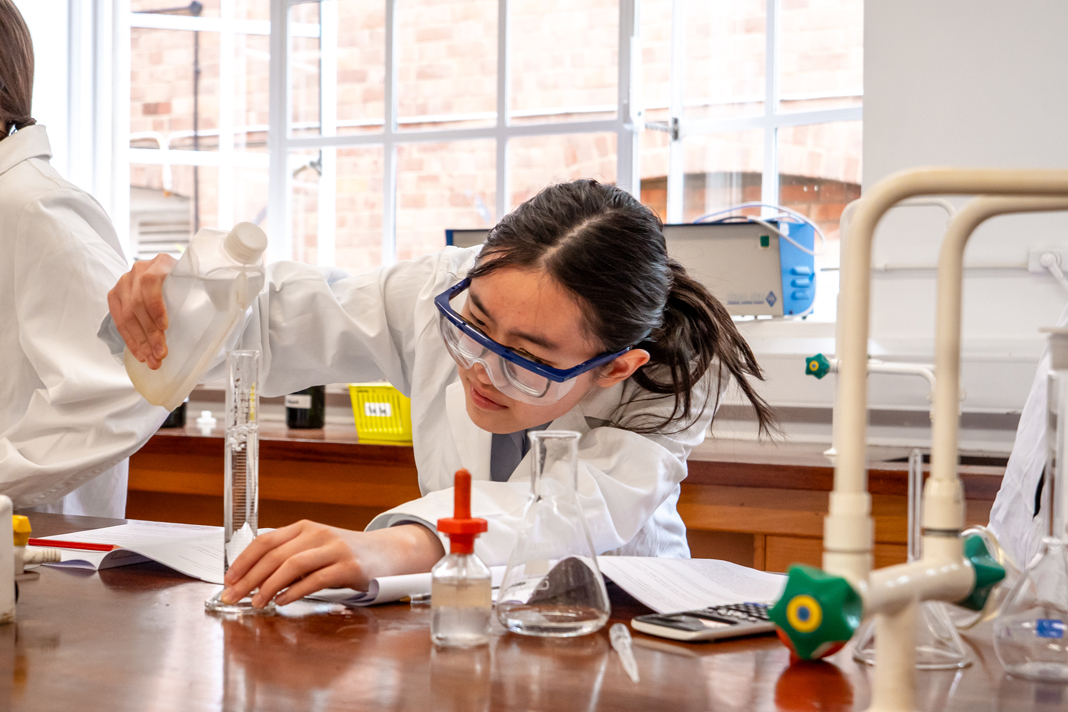
Our students are expected to arrive at lessons with a sense of curiosity sparked by new insights based on their own study (and, of course, having mastered the necessary facts). Our lessons are not tests. They are collaborative – as are most workplaces (and we remind our students of this). Teachers provoke questions and discussion to ensure each student’s understanding. We know that the ‘I’ve told you, you know it’ approach does not work. A sense of fun and mutual support is encouraged, as students learn to marshal their thoughts, test their memories, express their views and deal with challenges. They take ownership of their own learning.
As important as lessons and prep are the opportunities for academic enrichment outside the formal curriculum timetable. Younger students take part in cross-curricular sessions which help break down the arbitrary boundaries between subjects. The English department collaborates with Music and Dance; Classics works with Drama and History; Computer Science joins History and Mathematics to look at cracking codes.
Older students can choose from a wide range of clubs and societies to develop their interests or try new ones. Our Sixth Form scientists are collaborating with Stanford University, using CRISPR gene editing to study mutations in fruit flies. Some of our humanities students are carrying out university-level research through the award-winning Schools of Empire project. Those with a passion for creative writing work alongside internationally renowned poets and attend an annual residential course with professional authors.
Why do we teach this way at Rugby? Because we believe that intellectual curiosity, nurtured in a spirit of collaboration, is the best way to acquire the knowledge, skills and confidence required for living in an unpredictable world. And for passing exams, too.
Rugby School rugbyschool.co.uk
Further reading: Downe House School on the importance of media management
You may also like...