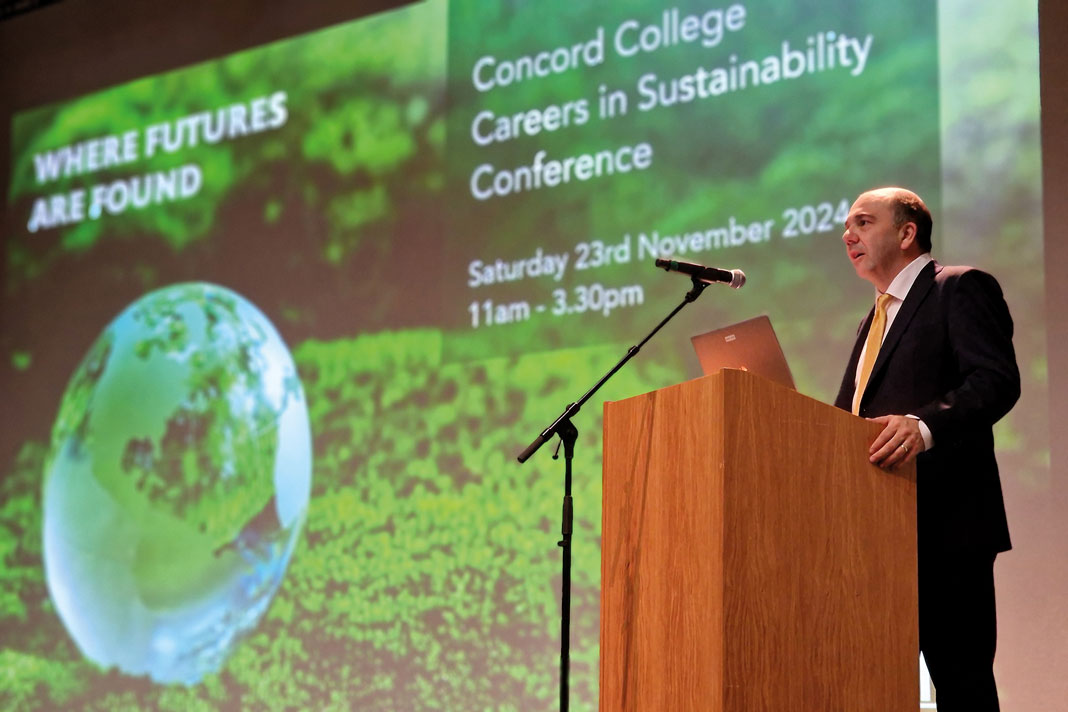
Dr Michael Truss, Principal of Concord College on how students with strong collaborative skills can and do put technology to good use
Learning to collaborate and solve problems creatively is one of the key goals of education in the modern world. Schools work hard to put in place opportunities to practise and develop these skills.
At Concord, we use team competitions, regular outdoor education trips, music, drama productions and sports to provide fun and fulfilling opportunities to scaffold this kind of learning. For example, our youngest students in year 9 benefit from a special pre-GCSE curriculum designed to set them up with skills such as these. Their year culminates in a Shakespeare production for which they have created the set, costumes and music, with every single child involved in all aspects – including the final show.
This is all exciting, fulfilling stuff, but what does success in developing these skills really look like? At Concord, we argue that it is much more than simply delivering the lessons or the activities and competitions. Rather, it is students collaborating and problem solving within their own community for the benefit of themselves, their friends and the world beyond. Crucially, very often this happens without the students themselves being asked.
“The success of our young people should not be seen as a zero-sum game – they can and will work together to make things better”
Concord is highly academic and many of our students could be described as competitive – they like to score highly; they like to win. They also form a uniquely positive community and some of our 2026 leavers – many of whom I am proud to say have been here since year 9 when they created a magical and memorable Romeo and Juliet – have really brought home to me the power of that community to work together.
We have always had a formal network of student volunteer subject mentors who help other students. However, what has emerged this year is a far wider collaboration among our students to enhance the already impressive resources at their disposal, to share those widely among the community and, hopefully, to pass on a legacy for students to come.

Beginning with small, informal study groups in classrooms after prep, they expanded to meeting online when they were at home (wherever in the world that was). From there shared folders of notes, links, ideas, questions appeared, each member of the group adding what they had, all willingly discussing their thoughts, preparing work to talk through, willingly admitting when they were unsure.
In particular, for A level History and Physics, members of the study groups took using the available technology further – using computer coding and some AI tools to collate exam questions and categorise them in ways that make tackling specific aspects of the syllabus or particular types of question simpler. Another student harnessed the power of coding to develop a collection of resources for students choosing their university courses and looking for activities they could take part in that might support their applications.
The students of 6.2 at Concord are a wonderful demonstration that the success of our young people should not be seen as a zero-sum game. They can and will work together to make things better and they will think even bigger than that if we equip them well. They are also a positive note among the worries around AI – demonstrating that technology can be mastered by young minds equipped with the very human skills to use and not be used by it.
Concord College concordcollegeuk.com
Further reading: Wellington College on why we must act on AI
You may also like...